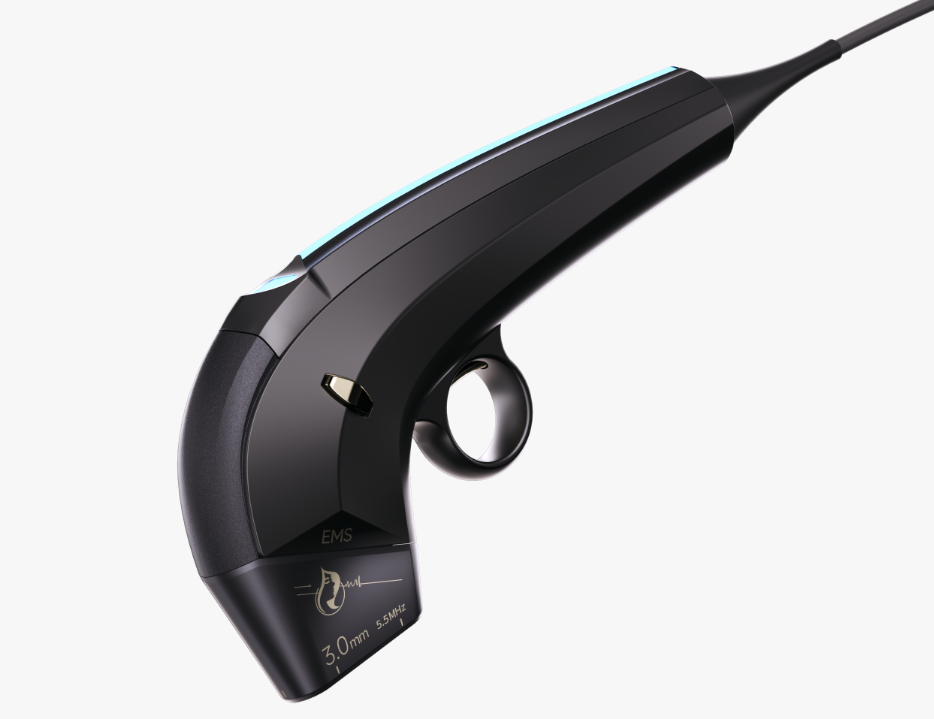
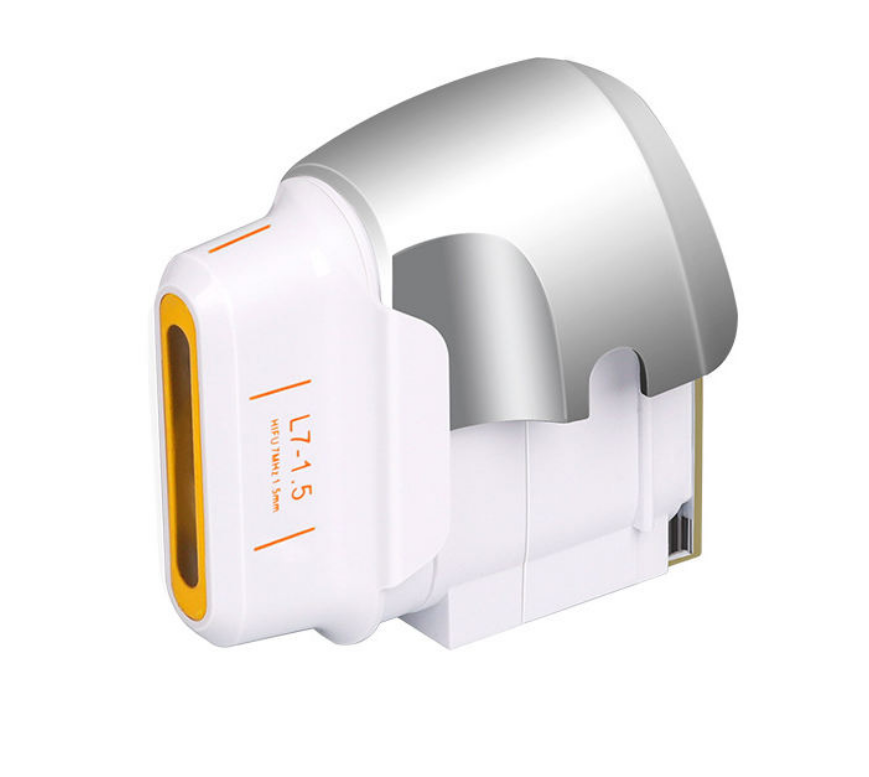
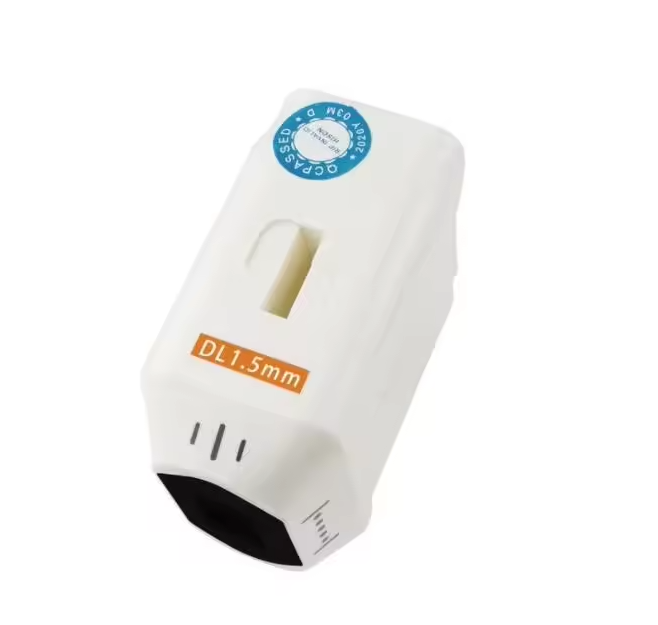
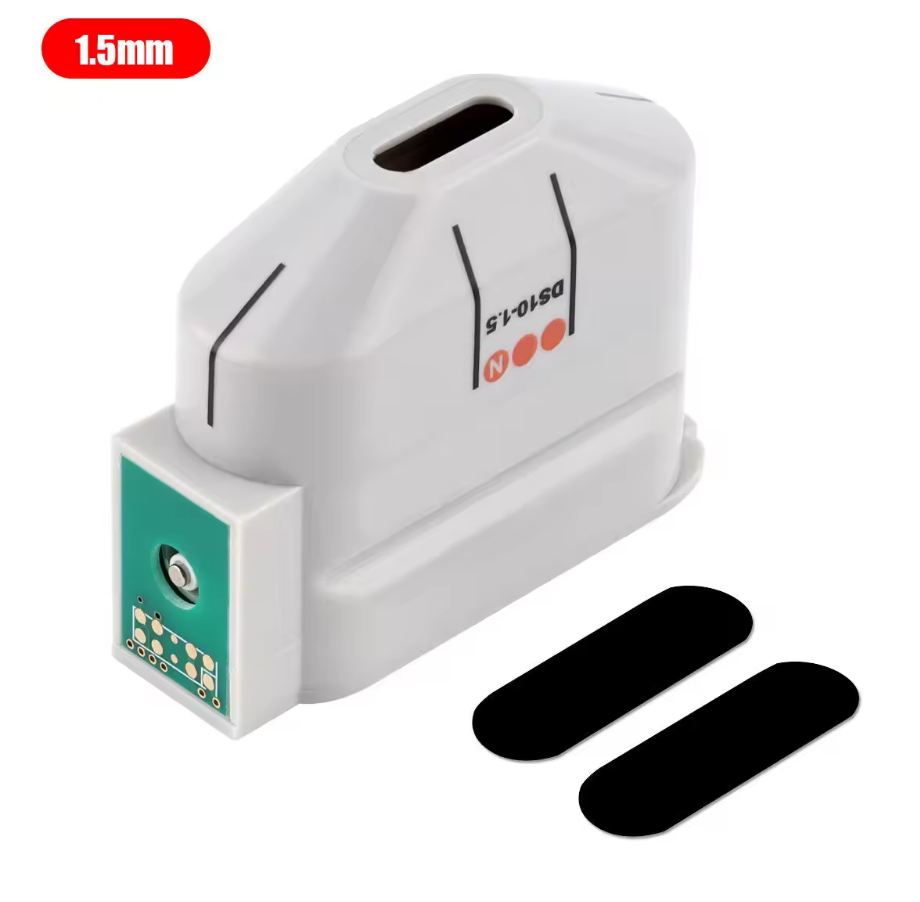
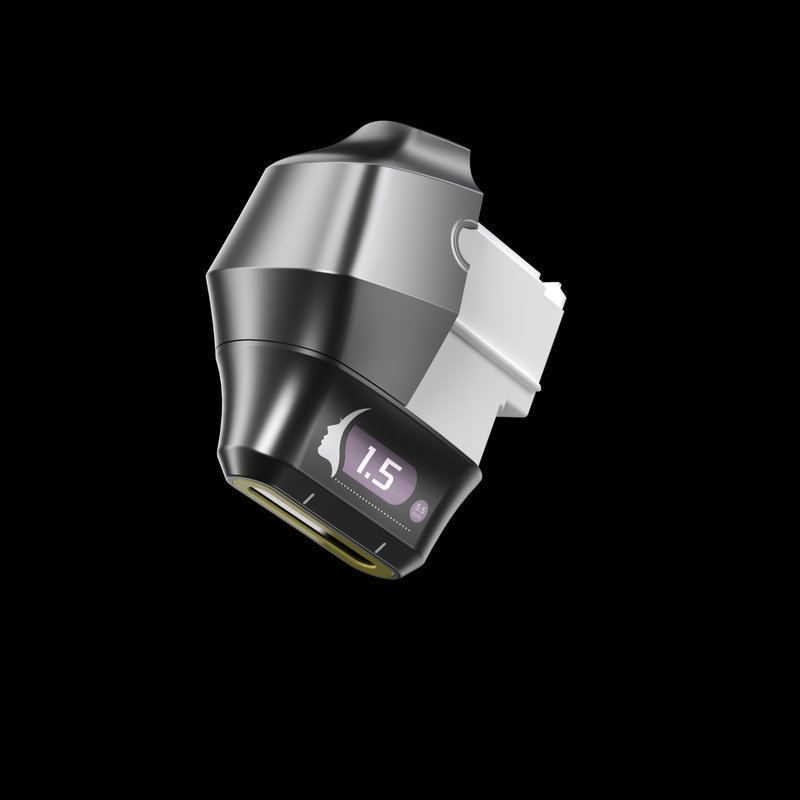
Your HIFU handpiece is the thing that actually delivers energy to the patient. It takes a beating — thousands of insertions, constant plugging and unplugging, heat cycling, gel residue, the occasional drop on the floor. When it stops working right, your whole treatment grinds to a halt. And in our experience, when a clinic calls about “machine problems,” the handpiece is the culprit about 70% of the time — not the console.
This guide covers the problems we see most often from customers, what’s actually causing them, and what you can fix yourself vs. what means it’s time for a replacement. The focus is on the kind of HIFU handpieces used in Chinese and Korean aesthetic machines — 2D, 4D, 7D, 12D platforms — but most of this applies to any handheld ultrasound transducer.
The HIFU handpiece — this component delivers energy to the patient and is the cause of roughly 70% of “machine problems”
Problem 1: Handpiece Doesn’t Fire at All
What you see:
You press the trigger or footswitch — nothing happens. No sound, no energy reading, no response.
The console screen looks normal, settings are correct, but zero output.
Handpiece indicator light is off, blinking, or showing an error.
Check these in order:
#
Check
Probability
Fix
1
Cable not fully seated
Very common
Unplug and firmly re-insert both ends — handpiece side AND console side. Listen for the click. This is the single most common cause of no-fire calls we get.
2
Footswitch stuck or disconnected
Common
Check the footswitch connection at the console. If the footswitch was already pressed when the machine powered on, some systems lock out the handpiece as a safety measure. Power-cycle the machine with the footswitch released.
3
Cartridge not making contact
Common
Remove cartridge, clean the gold contact pins on both the cartridge and inside the handpiece socket with 99% isopropyl alcohol on a cotton swab. Re-insert firmly. Twist-lock cartridges must click into place.
4
Handpiece not recognized by console
Occasional
If the console shows “HP” or “Handpiece not detected” — reseat all connections, reboot the system. If the error persists, the handpiece’s internal ID chip (SROM) may be defective. This requires handpiece replacement.
5
Blown power fuse
Rare
If the entire console is dead, check the main fuse. If only the handpiece channel is dead while other functions work, it’s not a fuse — it’s the handpiece circuit.
6
Cable internal damage
Rare but possible
Inspect the full length of the handpiece cable for kinks, cuts, or exposed wires. If you can see copper through the insulation, replace the cable or the entire handpiece (some models have non-detachable cables).
⚠️ Footswitch tip: If your machine was working fine yesterday and suddenly won’t fire today, check the footswitch first. They get kicked under treatment beds, stepped on with wet shoes, and wrapped around chair legs. A damaged footswitch is a $20 fix that gets misdiagnosed as a $300 handpiece problem all the time.
Problem 2: Weak or Inconsistent Energy
What you see:
Machine set to 2.0 J, but the treatment feels like 0.8 J.
Patient who normally reacts at 1.5 J says they barely feel anything at the same setting.
Shot-to-shot inconsistency — some fire strong, some fire weak, same settings throughout.
You find yourself creeping the energy setting higher and higher to get the same clinical response.
What’s usually going on:
Cause
How Often
What To Do
Low water in cartridge — #1 cause
Very common
Refill with distilled water. Every shot in a dry cartridge does 5-10× more wear. Check water before looking for anything else.
Cartridge near end of rated shots
Common
If you’re approaching or past the rated shot count, this is expected behavior. Replace the cartridge.
Loose cartridge in handpiece socket
Common
Remove and re-insert. A loose cartridge creates intermittent contact resistance, which causes exactly this — sometimes strong, sometimes weak.
Handpiece connector socket wear
Occasional — especially after 12+ months heavy use
The internal contact socket inside the handpiece wears over time from cartridge insertions. Gold plating rubs off, base metal oxidizes, resistance goes up. If you’ve tried a fresh cartridge and still get weak output, the handpiece socket is likely worn. Replacement handpiece needed.
Handpiece aging — coil/capacitor degradation
1-2+ years of use
Handpiece coils typically last 1-2 million pulses before impedance drifts. Capacitors degrade over 2-3 years. Both cause gradual power loss. If you’re replacing cartridges more often but getting the same weak results, the handpiece itself is tired. Replace the handpiece.
Machine calibration drift
Rare — usually 3+ years
The console’s power calibration can drift over years. If swapping both cartridge AND handpiece doesn’t fix it, the console needs factory recalibration. This is a send-back-to-supplier job.
Problem 3: Handpiece Overheating
What you see:
Handpiece gets uncomfortably hot to hold after 5-10 minutes of use.
Console shows overtemperature warning (OH, E5) and may auto-shutdown.
Cartridge tip is noticeably hot — not just warm, but hot.
Fix in this order:
Reduce firing frequency. Running at max Hz for extended periods generates cumulative heat that the cooling system can’t keep up with. Drop the firing speed and take a 2-minute cooling break every 10 minutes of continuous use.
Check your gel. Thin, cheap ultrasound gel doesn’t couple heat away from the handpiece tip effectively. Use proper HIFU-grade gel and apply generously — gel acts as a thermal bridge between the hot tip and the patient’s skin. Dry firing or insufficient gel is a direct path to overheating.
Clean the probe face and cooling vents. Gel residue builds up on the handpiece face over time. This residue insulates the tip and traps heat. Wipe with 70% isopropyl alcohol between patients. If your handpiece has air cooling vents, check they’re not clogged with gel or dust.
Check cartridge water. Low water in the cartridge means the crystal runs hotter. That heat conducts straight into the handpiece body. Top up the water.
Check airflow around the console. If your HIFU machine is pushed against a wall or has stuff stacked on top of it, the internal cooling fans can’t do their job. Keep at least 20cm of clear space on all sides. Clean the console air filters every 2-4 weeks — a clogged filter is the single most common cause of console overheating.
Voltage instability. If your clinic’s mains power fluctuates (common in older buildings or areas with unreliable grids), the machine’s power supply works harder and generates more heat. An inline voltage stabilizer or UPS can fix this — and it’s cheaper than a new handpiece.
🚨 Stop immediately if: you smell burning, see smoke, or the handpiece is too hot to hold. Continuing to fire an overheating handpiece can permanently damage the internal transducer. Power down, let everything cool for 30+ minutes, then work through the checklist above before restarting.
Problem 4: Error Codes — What They Actually Mean
Different manufacturers use different codes, but these are the most common across Chinese and Korean HIFU platforms. If your machine shows something different, check your manual — but the underlying problems are usually the same.
Error
Real Meaning
What To Do
Replace Or Fix?
E1 / Err1 / 243
Handpiece not detected — the console can’t see the handpiece
Reseat cable both ends. Clean contacts. Try a different handpiece to isolate whether it’s the handpiece or the console port.
Fix if cable/connection. Replace if internal chip failure.
E2 / Err2 / 240
Cartridge not detected or vibration error — tip may be loose or damaged
Remove and re-insert cartridge. Clean contact pins. Try a different cartridge. Tighten if it uses a threaded tip.
Usually fix. If persistent with multiple cartridges, handpiece socket is worn.
E3 / Err3 / 324-325
Cartridge short circuit OR poor insulation between piezo electrodes
Water may have leaked into electrical contacts. Remove cartridge, dry for 24 hours, retry. If error persists, the cartridge’s internal insulation has failed.
Replace cartridge. If multiple cartridges trigger this, the handpiece’s internal insulation is compromised — replace handpiece.
E5 / OH / OL
Overtemperature or overload — handpiece/console too hot
Power down. Let cool 15-30 minutes. Check cooling vents, gel application, cartridge water level, room temperature.
Fix by addressing root cause. If it keeps happening with normal use, the cooling system has a problem — contact supplier.
E7
Shot count exceeded — cartridge has reached its rated lifespan
Replace cartridge. If you’re on a 12D coded cartridge, this is a hard lock — no workaround.
Replace cartridge.
HP
Handpiece sensor signal malfunction — the console is getting garbled data from the handpiece
Reseat the handpiece connector firmly. Ensure the cartridge/holder is properly installed. Reboot the system.
If reboot doesn’t clear it, the handpiece’s internal sensor board or SROM chip has failed. Replace handpiece.
E-F
Foot control disconnection
Check footswitch cable. Try a different footswitch if you have one.
Usually a cheap footswitch replacement.
P0
Power pack malfunction or voltage issue
Turn off, wait, restart. If persistent, check your mains voltage or try a different power outlet.
If it recurs across different outlets, the power supply module is failing — service required.
These codes come from combining error tables across multiple HIFU/ultrasound device service manuals. Your machine may use slightly different numbers. If an error code isn’t listed here, search for your machine’s specific manual — but the underlying fault is almost always one of the above.
Problem 5: Loud or Abnormal Noise from Handpiece
What you hear:
Normal operation is a consistent “tick” sound with each shot. If that changes — it gets louder, develops a rattle, sounds “crunchy” — something is mechanically wrong.
Diagnosis:
Sound Change
Likely Cause
Act
Louder than normal, “banging”
Loose tip/cartridge vibrating in the socket
Remove and re-seat firmly. Tighten.
High-pitched “squeal” or “whistle”
Cartridge crystal delamination — the crystal layers are separating and vibrating out of phase
Replace cartridge immediately. Continuing will damage the handpiece socket.
“Crunchy” or grinding
Physical debris in the handpiece socket, or a shattered cartridge tip leaving fragments inside
Power off. Inspect socket with a flashlight. Clean with compressed air. If debris is inside the handpiece body, it needs professional cleaning or replacement.
No sound at all but console shows firing
Cartridge crystal completely failed — the electrical pulse fires but the crystal can’t vibrate
Replace cartridge. This failure is mechanical, not electrical — the console thinks everything is fine.
Maintenance Schedule — Keep the Handpiece Alive Longer
Most handpiece failures are gradual, not sudden. A little routine maintenance buys you months of extra life:
When
Task
Why
Between every patient
Wipe handpiece face and cartridge contacts with 70% isopropyl alcohol
Gel residue is the #1 cause of overheating. Dried gel on electrical contacts = bad connection = weak output.
Every week
Inspect full cable length for kinks, cuts, or exposed wire
Cable damage is progressive. A small kink today is an intermittent connection next week and a dead handpiece next month.
Every 2-4 weeks
Clean console air filters; check cooling vents on handpiece (if air-cooled)
Clogged filters = reduced airflow = overheating shutdowns. A 5-minute clean prevents hours of downtime.
Every month
Clean the handpiece socket with isopropyl alcohol on a cotton swab
Oxidation on contact pins increases resistance over time. Monthly cleaning keeps impedance in spec.
Every 6-12 months
Professional calibration — verify power output against manufacturer spec
Gradual power loss is invisible day-to-day. You don’t notice you’ve crept from 2.0 J to 2.5 J to get the same result until a new patient complains it’s too weak at normal settings. Annual calibration catches this.
✅ Rule of thumb for handpiece replacement: If you’re spending more time troubleshooting than treating — and you’ve ruled out the cartridge, the cable, and the footswitch — just replace the handpiece. The cost of a new handpiece ($150-350 for most models) is less than the revenue from 3-5 HIFU treatments. Downtime costs more than parts. Keep a spare handpiece on the shelf and you’ll never lose a day of bookings.
Quick Troubleshooting Flowchart
If you don’t want to read the whole article, here’s the short version:
No fire at all? → Check cable connections → check footswitch → try different cartridge → try different handpiece → if nothing works, console needs service.
Weak / inconsistent? → Add water to cartridge → try new cartridge → check handpiece socket for wear → if still weak with new cartridge, replace handpiece.
Overheating? → Reduce Hz → check gel quality → clean probe face → check water → check cooling vents.
Error code? → Look it up in the table above → follow the “What To Do” column → escalate to supplier if the fix column says “replace.”
Weird noise? → Tighten cartridge → if sound persists, replace cartridge → if sound persists with new cartridge, debris in handpiece socket → inspect and clean.
Replacement HIFU Cartridges & Handpieces — We Stock Them All
If troubleshooting leads to “replace the cartridge” or “replace the handpiece,” we’ve got you covered. Factory-direct quality, CE certified, worldwide shipping. Contact us for handpiece availability →