If you’ve been shopping for HIFU cartridges, you’ve seen the labels — 2D, 4D, 7D, 12D. They all look roughly the same in photos, the descriptions sound similar, and the price gap between a 2D and a 12D cartridge can be 3-4×. So what are you actually paying for?
Here’s the first thing to understand: the “D” is a marketing label, not a technical standard. There’s no ISO committee or medical device regulation that defines what makes something “7D” vs “12D.” One factory’s “7D cartridge” might have completely different internals from another factory’s “7D cartridge.” The D-number is best understood as a product series identifier — it tells you which handpiece and machine the cartridge plugs into, and roughly what generation of technology it represents. Nothing more.
That said, there are real physical differences between the cartridge series. This guide breaks them down — not the marketing version, but what actually matters when you’re stocking cartridges for your clinic.
What the “D” Numbers Actually Tell You
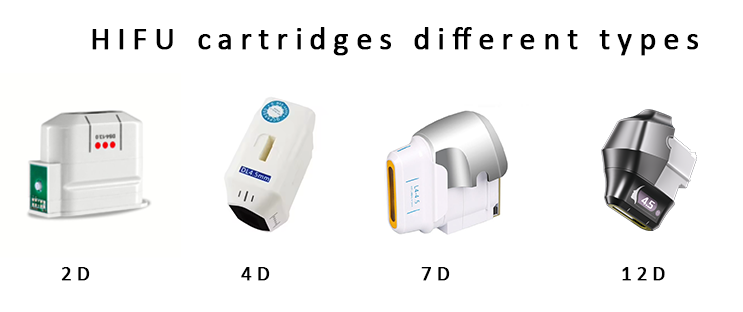
Putting the marketing aside, each series has distinct hardware that determines what it can and can’t do:
2D HIFU — The Budget Workhorse
This is the simplest HIFU technology. One trigger pull = one ultrasound pulse. The transducer inside the cartridge is a basic single-focus crystal, which keeps manufacturing costs down but also limits what you can do per treatment session.
What it’s good at: Basic face lifting, jawline tightening, small treatment areas. If you’re doing 2-3 HIFU clients a week and budget matters more than speed, 2D works fine. The 5 depth options cover the essential zones — 1.5/3.0/4.5mm for face, 8.0/13mm for body.
Where it falls short: At 35-45 minutes for a full face, it’s slow. Each shot covers a single focal point, so you need a lot more shots to cover the same area compared to multi-line systems. The 10,000-shot cartridge rating means you’re replacing cartridges more often than with 4D or 7D. And there’s no 2.0mm option for the eye area — you simply can’t safely treat crow’s feet or perioral lines with a 2D cartridge.
Bottom line: Fine for startups and low-volume backup. Not what you want if HIFU is a core revenue stream. Compatible with 2D HIFU machines only.
4D HIFU — The Multi-Line Middle Ground
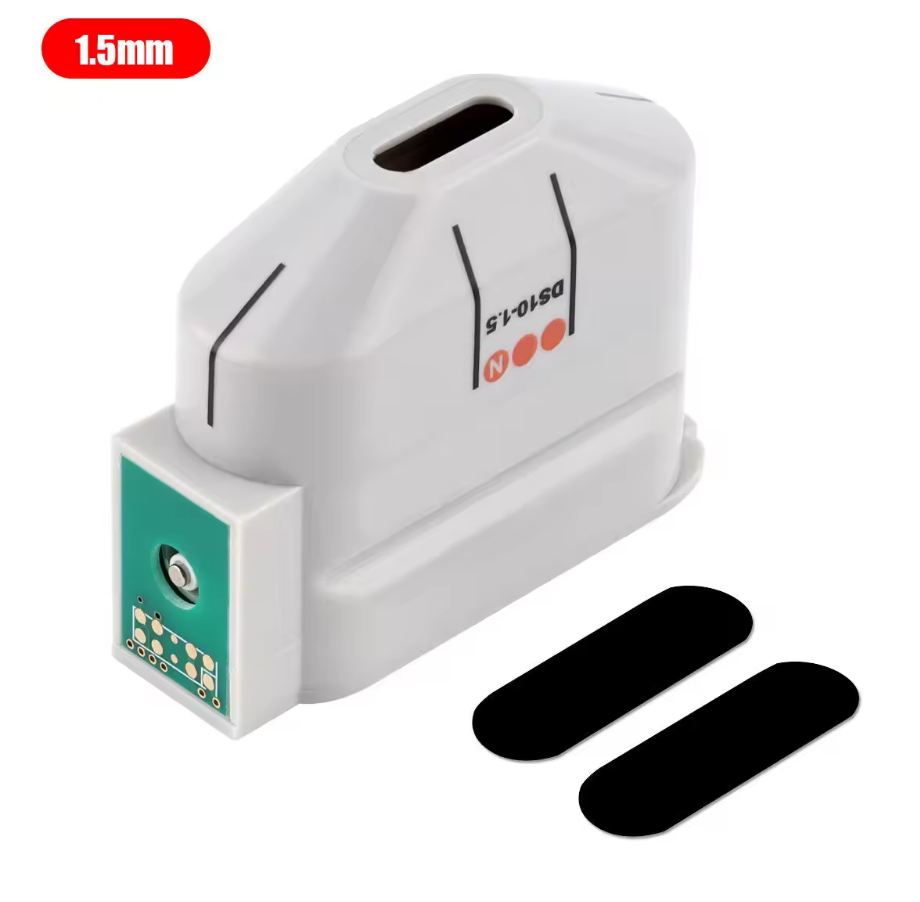
4D fires up to 12 ultrasound lines simultaneously per shot instead of one. In theory, this means faster coverage and more uniform energy distribution across the treatment area. In practice, it’s a meaningful upgrade from 2D — but it has trade-offs.
What it’s good at: Wider per-shot coverage means you finish treatments faster than 2D (roughly 30-40 minutes for a full face). With 8 depth options spanning 1.5mm to 16mm, you’ve got more clinical flexibility. And crucially, 4D has the widest machine compatibility of any HIFU series — it works with 4D, 5D, 6D, 9D, and Multifunctional HIFU platforms. If you own multiple machine brands, 4D cartridges might fit several of them.
Where it falls short: That multi-line output comes at a precision cost. The energy is spread across 12 lines simultaneously, which can make the treatment feel hotter and less controlled to the patient. Multiple sources report 4D as less comfortable than 7D or 12D. And like 2D, there’s no 2.0mm cartridge for the eye area — a surprising omission for a system that positions itself above 2D. The 20,000-shot rating is decent, but 7D offers 50% more.
Bottom line: Good entry-level multi-line system. The widest machine compatibility of any HIFU series. Best for starter clinics that want face + body capability without jumping to 7D pricing. Compatible with 4D/5D/6D/9D/Multifunctional HIFU machines.
7D HIFU — The Professional Standard
If there’s a “default” HIFU cartridge series, it’s 7D. This is the most widely used HIFU platform globally, and for good reason — it hits the sweet spot between capability, comfort, and cost.
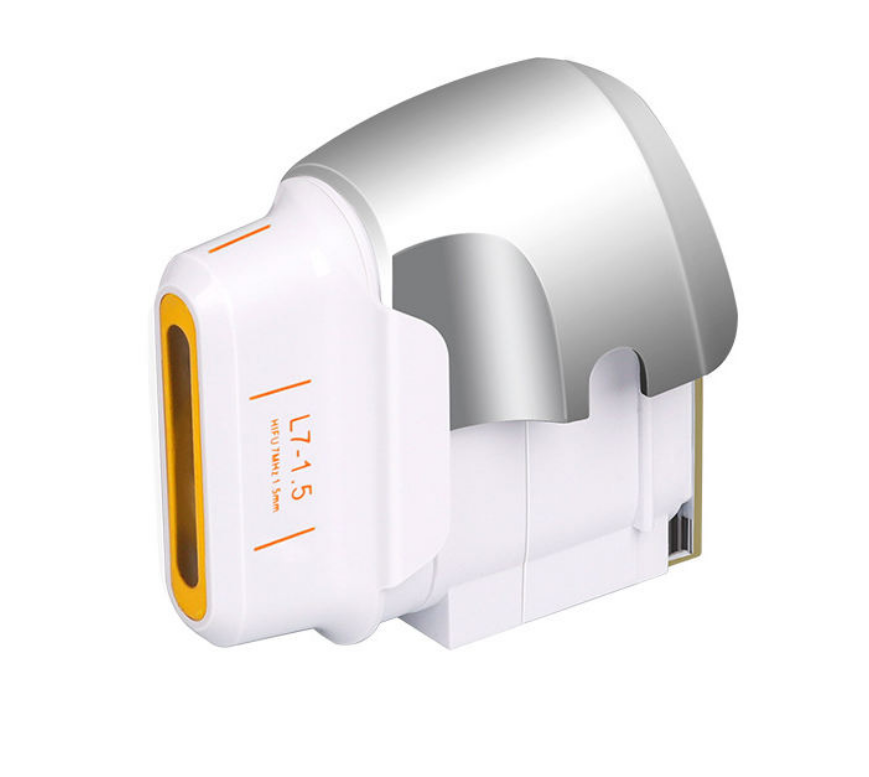
What it’s good at: The MMFU (Micro & Macro Focused Ultrasound) dual-engine system uses higher frequencies (4-5.5 MHz) for shallow facial depths and lower frequencies (2 MHz) for deeper body depths. Instead of firing multiple lines per shot like 4D, 7D fires one line with 12 focal points packed into that line. This gives you more controlled energy delivery — each of those 12 points is hitting the target depth precisely, rather than spreading energy across a wide multi-line beam. Patients consistently report 7D as more comfortable than 4D.
The standout feature is the 2.0mm cartridge. This is the only depth that can safely treat the thin skin around the eyes (crow’s feet) and mouth (perioral lines). No other HIFU series in the 2D/4D range has this — it’s a genuine clinical differentiator, not a marketing bullet point. If you treat the eye area, you need 7D or 12D.
With 20,000-30,000 rated shots per cartridge and full-face treatments taking about 20-25 minutes, 7D delivers the best throughput-per-dollar of any HIFU system. The aftermarket support is unmatched — every HIFU parts supplier stocks 7D cartridges because it’s what everyone uses.
Where it falls short: Not as fast as 12D’s MP mode. Cartridge compatibility is limited to 7D machines — it won’t work in 4D or 12D handpieces. And because it’s the most popular, it’s also the most counterfeited — you need to know how to spot fakes.
Bottom line: The best all-around choice for full-service clinics. Face, body, eye area — it does everything. Widest aftermarket availability. If you’re buying your first HIFU machine, start with 7D. Compatible with 7D HIFU machines only.
12D HIFU — The Speed Demon
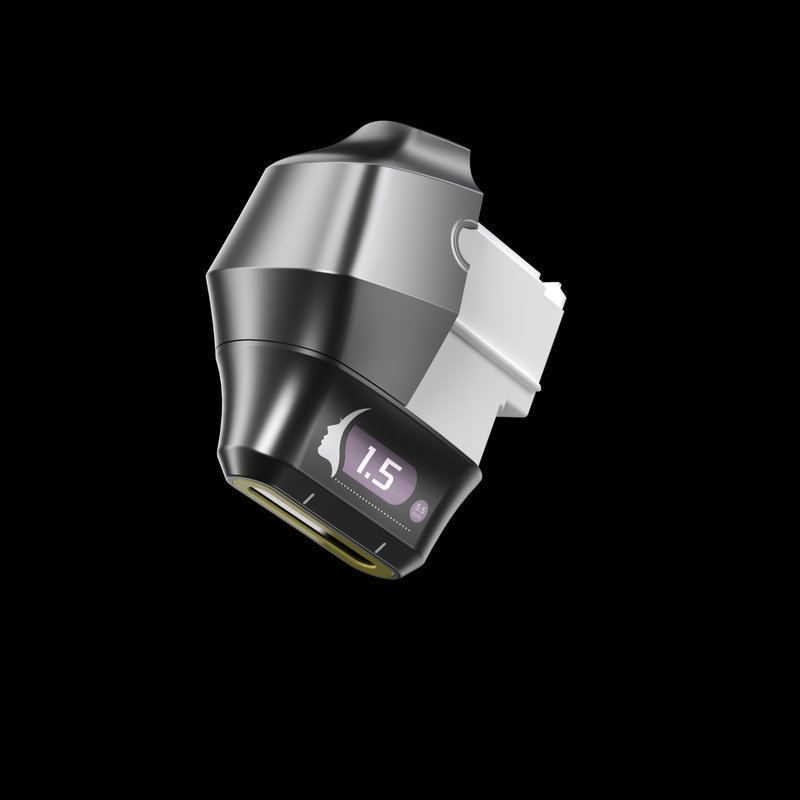
12D is the newest generation. The headline feature is MP (Micro-Pulse) Mode, which fires ultra-short, ultra-dense pulses — up to 417 thermal coagulation points from a single trigger pull. That’s an order of magnitude more than any other HIFU system. The result: a full-face treatment in 10-15 minutes instead of 25-35. For high-volume clinics, that’s the difference between 3 patients an hour and 5.
What it’s good at: Raw speed. The MP mode is genuinely impressive — you cover large areas in a fraction of the time. 8 depth options (1.5mm to 16mm) cover face and body. Some 12D systems include 360° annular probes for circumferential treatment of arms, thighs, and vaginal areas. Patient comfort is excellent — most describe the MP pulses as a warm tapping sensation rather than the sharp “zap” of older systems.
Where it falls short — and this matters a lot for your costs:
- Coded cartridges. Many 12D Max cartridges have a memory chip that permanently locks the cartridge when the shot counter hits the rated limit. On a 2D, 4D, or 7D cartridge, you can squeeze out a few hundred extra shots past the rating if the cartridge is still performing fine. On 12D, when it hits 10,000, it stops. Period. No workaround. This makes your per-shot cost more predictable, but also less flexible — you can’t nurse a dying cartridge through a last-minute appointment.
- Lowest rated lifespan (10,000 shots). Despite being the most expensive per cartridge, 12D cartridges are rated for half the shots of 7D and the same as the budget 2D. The MP mode fires so many points per shot that the crystal degrades faster.
- The “12D Paradox” — Several industry sources note that the 12-line maximum capability is rarely used in daily practice. Most operators run at 4-8 lines because 12 lines at once generates significant heat. You’re paying for a capability you may never fully use.
- Exclusive compatibility. 12D Max cartridges work with 12D Max machines only. Not compatible with anything else. You’re locked into a single ecosystem with fewer aftermarket suppliers.
Bottom line: Fastest HIFU system on the market. Makes sense for busy clinics doing 10+ HIFU patients a day where speed directly translates to revenue. The coded cartridge system and low 10,000-shot rating mean your consumable costs per treatment will be higher than 7D — factor that into your pricing. Compatible with 12D Max HIFU machines only.
Which One Should You Buy?
Again — your existing machine decides for you. But if you’re comparing machines before buying, here’s the practical breakdown:
7 Questions to Ask Before Buying HIFU Cartridges
These apply whether you’re buying from us or anyone else. Good suppliers will answer all of them without hesitation.
- What are the exact cartridge depths and frequencies? Get the numbers, not the D-label. 1.5, 3.0, and 4.5mm are non-negotiable for facial HIFU. If you want eye treatments, 2.0mm is mandatory.
- How many rated shots per cartridge, and what’s the actual replacement cost? Calculate per-shot cost, not per-cartridge cost. A $15 cartridge with 10,000 shots costs more per shot than a $25 cartridge with 30,000 shots.
- Are the cartridges coded or locked? If yes, the cartridge will stop working at its rated count regardless of actual condition. Fine for big chains managing costs — annoying for small clinics that want to stretch every cartridge.
- What’s the firing pattern? Is it adjustable? Can you switch between single-line and multi-line mode? Being locked into 12-line mode on a 4D can limit precision on small treatment areas.
- What certifications do the cartridges carry? CE marking at minimum. FDA clearance if you’re in the US. Ask for the certificate PDF, not just the logo on a website.
- What’s the warranty and what does it actually cover? Most cartridge warranties are 30-90 days and only cover manufacturing defects — not normal wear. Know what you’re getting.
- Can I order 2-3 samples to test before committing to a bulk order? A supplier that says no is a red flag. Always test cartridges on your actual machine before placing a volume order.
Genuine HIFU Cartridges — All Series, Factory Direct
We stock the full range — 2D, 4D, 7D, 12D Max, Liposonix, and 22D Max. Every cartridge uses full-size piezoelectric crystals with gold-plated connectors. CE certified. Bulk pricing available. Worldwide DHL/FedEx shipping. Ask about sample orders →