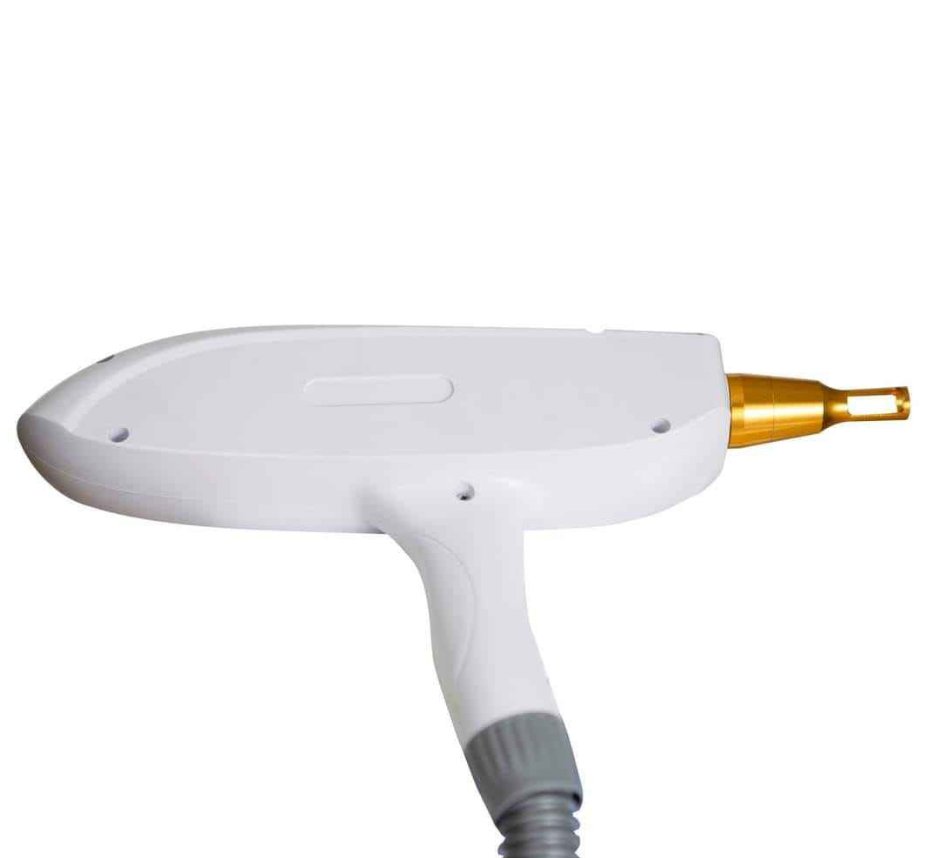
If you’ve been shopping for an Nd:YAG handpiece, you’ve seen the options — single lamp single rod, single lamp dual rod, and sometimes “black doll” or carbon peel handpieces. The first two are the real workhorses, and the choice between them matters a lot more than most supplier listings make it seem.
Here’s the practical difference, stripped of the spec-sheet marketing: a dual-rod handpiece gives you roughly 2-3× the maximum energy output and significantly larger spot sizes compared to a single-rod. That means deeper penetration, faster treatments on large tattoos, and the ability to treat conditions the single-rod simply can’t reach. But it also means higher cost, shorter lamp life, and a machine that’s less forgiving if your cooling system isn’t perfect.
This guide breaks down the real trade-offs — the ones that matter when you’re treating actual patients, not comparing datasheets.
What “Single Rod” and “Dual Rod” Actually Mean
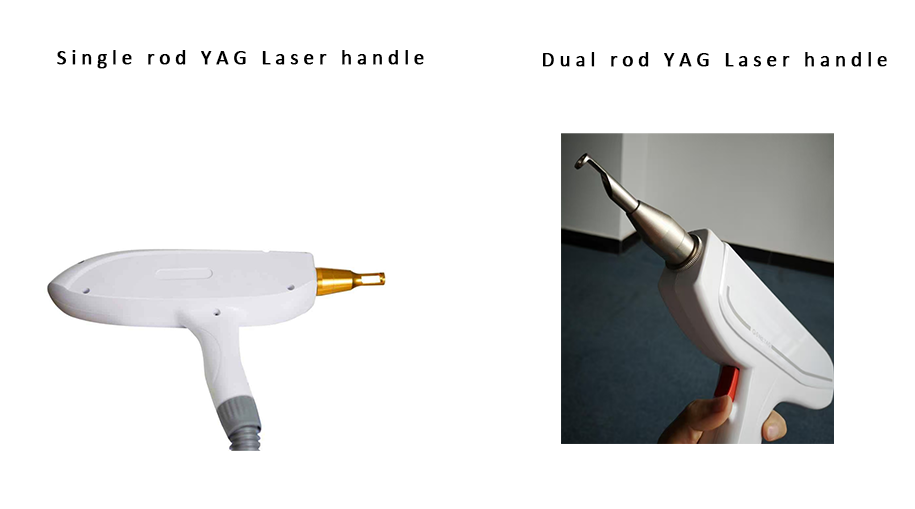
Inside every Nd:YAG handpiece is a laser rod — a solid crystal of yttrium aluminum garnet doped with neodymium. The flash lamp fires, the rod absorbs the light, and the rod emits laser energy. Simple enough.
A single-rod handpiece has one rod, pumped by one flash lamp. A dual-rod handpiece has two rods, both pumped by a single flash lamp (in the most common design — there are also dual-lamp dual-rod systems, but those are rare in aesthetic machines and more common in industrial lasers).
Two rods in series means the light from the lamp passes through the first rod, then the second rod, getting absorbed by both. This gives you more total laser output — not double (the physics doesn’t work that cleanly), but substantially more.
Why Spot Size Matters More Than Raw Energy
This is the thing most buyers miss: the real advantage of a dual-rod handpiece isn’t just higher joules — it’s larger spot sizes. And larger spots mean deeper penetration, even at the same energy density.
Research using Monte Carlo modeling (Ash et al.) has shown that spot diameter directly determines how deep laser light penetrates into skin. A 6mm spot at 5 J/cm² penetrates significantly deeper than a 3mm spot at 5 J/cm² — same fluence, same wavelength, different depth. This is because larger spots have less lateral scattering relative to their diameter, so more photons travel straight down.
In practical terms:
- A single-rod handpiece at 4mm spot works well for superficial tattoos and epidermal pigmentation. The energy reaches maybe 0.5-1mm deep.
- A dual-rod handpiece at 8mm spot reaches 2-3mm deep. That’s the difference between hitting shallow amateur ink and reaching professional tattoo pigment buried in the deep dermis.
If you’re treating anything deeper than amateur tattoos or surface pigmentation, the dual-rod’s larger spot capability isn’t a luxury — it’s what gets the job done.
What Each Configuration Treats Best
Single Lamp, Single Rod — Best For:
- Eyebrow/eyeliner tattoo removal — small, superficial cosmetic tattoos with fine lines
- Lip line tattoos — precise targeting needed, small area
- Superficial pigmented lesions — freckles, age spots, seborrheic keratosis near the surface
- Small amateur tattoos — shallow ink, small surface area
- Lighter ink colors — reds, oranges that absorb at 532nm and don’t need deep penetration
- Low-volume clinics — doing 2-3 tattoo removal sessions a week, budget matters more than speed
Single Lamp, Dual Rod — Best For:
- Deep professional tattoos — ink deposited deep in the dermis, multiple colors, dense pigment
- Stubborn or multi-color tattoos — the ones that don’t respond well after 3-4 single-rod sessions
- Nevus of Ota / birthmarks — pigment deep in the dermis that single-rod can’t reach effectively
- Melasma and deep pigmentation — chloasma, dermal melasma
- Telangiectasia (small blood vessels) — deeper vascular targets
- Large-area tattoos — full sleeve, back pieces where treatment speed matters
- Medium-to-high volume clinics — doing 5+ sessions a day, where faster treatment = more patients = more revenue
The Hidden Cost: Lamp Life
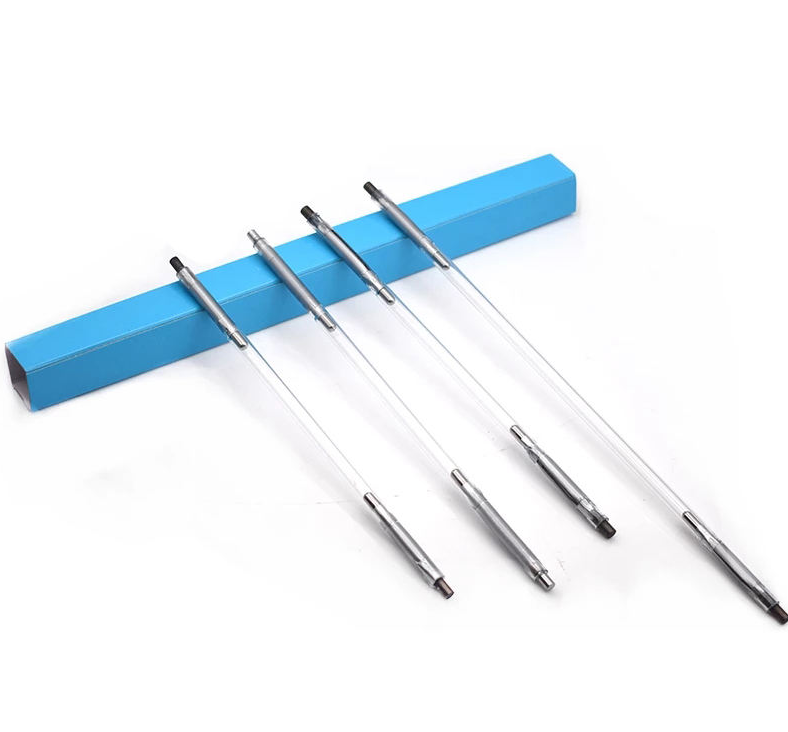
In a single-lamp dual-rod handpiece, one flash lamp is powering two laser rods. This means the lamp runs at higher energy to pump both rods effectively. The trade-off: lamp life is typically 20-30% shorter in dual-rod configurations compared to single-rod running the same lamp at lower load.
This doesn’t make dual-rod a bad choice — it just means you need to factor lamp replacement into your cost calculation. If a single-rod handpiece gets 1.5 million shots per lamp and you replace lamps every 12-18 months, expect a dual-rod to need lamps every 8-14 months under the same workload. For a $40 lamp, that’s an extra $20-30/year in consumables — trivial compared to the clinical capability you gain. But it’s worth knowing so you’re not surprised when the lamp counter ticks down faster.
Wavelength & Spot Size Quick Reference
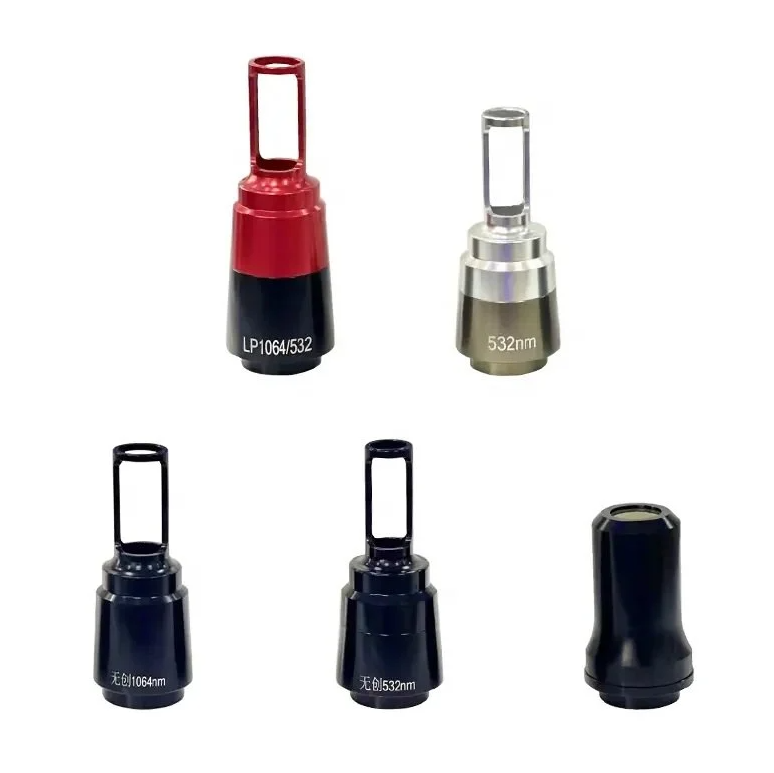
For any Nd:YAG handpiece — single or dual rod — the same wavelength rules apply:
Note: 532nm is absorbed heavily by melanin in the epidermis. Using it on Fitzpatrick IV+ skin types risks hypopigmentation and burns. When in doubt, test a small inconspicuous spot first.
Carbon Peel / Black Doll Handpiece — A Quick Note
Carbon peel handpieces are a third type you’ll see listed alongside single and dual rod options. These are not a fundamentally different rod configuration — they’re typically a single-rod handpiece optimized for low fluence, high repetition rate operation with a carbon lotion applied to the skin. The carbon particles absorb the laser energy and create a micro-explosion that exfoliates the superficial skin layer. It’s effective for skin rejuvenation, pore tightening, and mild acne scarring — but it’s not a replacement for a dedicated tattoo removal handpiece. If you want to offer carbon peel facials, get a dedicated carbon peel handpiece. Don’t try to use your tattoo removal handpiece for carbon peel — the parameters and beam characteristics are different.
Which One Should You Buy?
FAQ
Can I upgrade a single-rod machine to dual-rod by just swapping the handpiece?
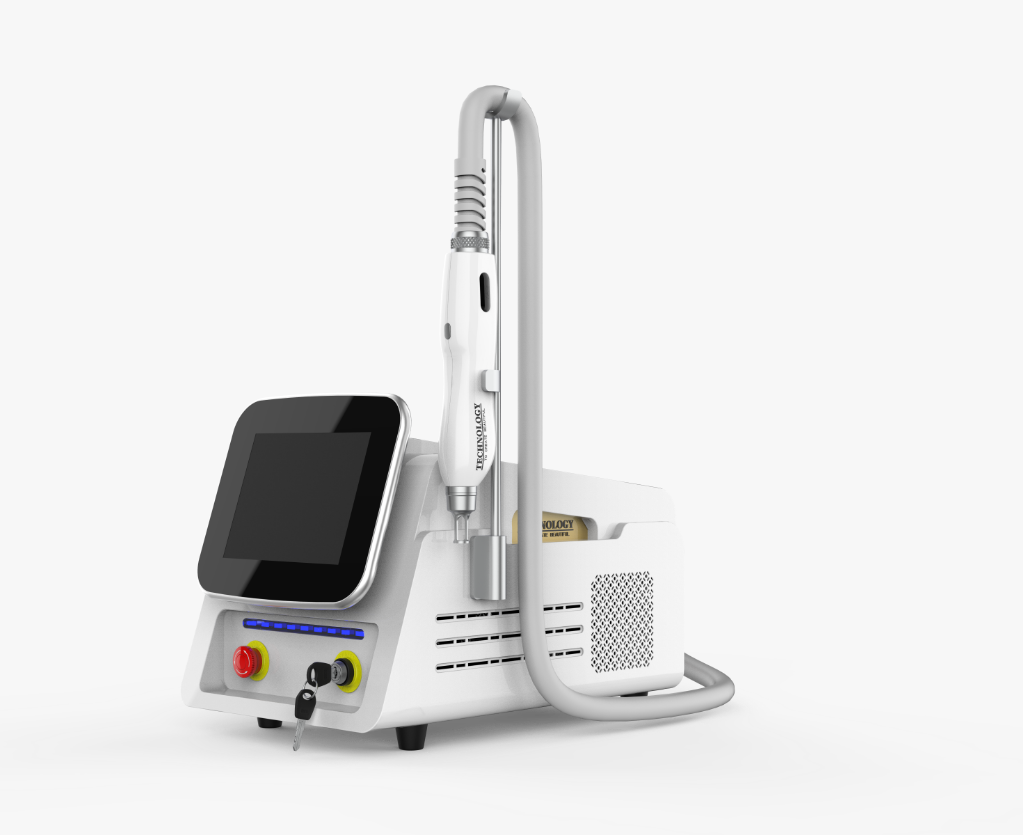
Usually no. The power supply in a single-rod machine may not be able to deliver enough current to drive a dual-rod handpiece at its rated energy. The console and handpiece are designed as a matched system. Check with your manufacturer before attempting — plugging a dual-rod handpiece into a single-rod console can result in weak output, frequent errors, or damage to the power supply.
Does a dual-rod handpiece hurt the patient more?
Not necessarily. With larger spot sizes, you can achieve the same clinical effect at lower fluence (energy density), which can actually be more comfortable for the patient. The sensation is different — larger spots feel more like a broad heat, while smaller spots at high fluence feel like a sharp snap. Most patients prefer the dual-rod feel for large areas, but it’s subjective.
What about Pico laser handpieces — do they use the same rod configurations?
Pico (picosecond) lasers use a different pulse generation mechanism and typically don’t use the same single/dual rod terminology. Pico handpieces are generally optimized for ultra-short pulses and may have different internal optics. The concepts of spot size and wavelength selection are the same, but the hardware inside is different. Don’t assume a Q-switch handpiece and a Pico handpiece from the same manufacturer are interchangeable.
ND YAG Handpieces, Lamps & Parts — All Configurations in Stock
We stock single rod, dual rod, and carbon peel handpieces for Q-switched ND YAG lasers. Plus flash lamps in all 10 sizes and treatment tips in all 4 wavelengths. Tell us what you need →