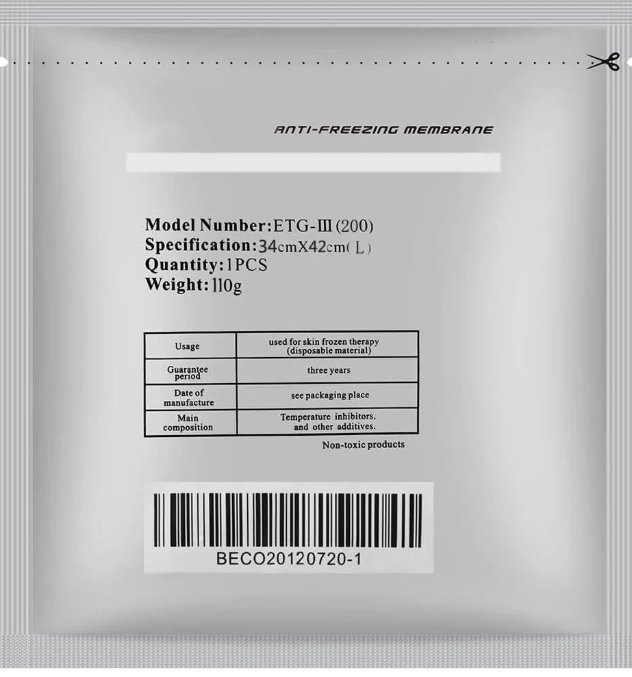
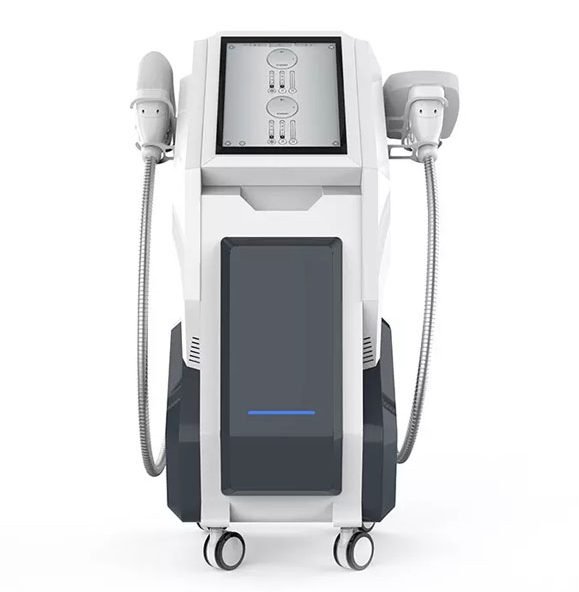
If you do cryolipolysis treatments, you use anti-freeze membranes. Every session, every patient, every treatment area — a fresh membrane goes between the cooling applicator and the skin. But most people using them don’t actually know what’s in them, why they work, or how to tell a good one from a cheap one. Here’s what’s actually going on with the pad that makes fat freezing possible without freezing the patient.
Why You Can’t Just Put a Cold Plate Directly on Skin
Cryolipolysis works by cooling fat cells to temperatures that cause apoptosis — programmed cell death. This typically means the cooling plate is running at somewhere between -5°C and -10°C. Fat cells start dying around 4°C. The problem: your skin — the epidermis and dermis sitting right on top of that fat — does not tolerate -10°C for 40 minutes.
Put a -10°C metal plate directly on someone’s belly and you’ll give them a frostbite burn. The skin cells will crystallize, the blood vessels will constrict and die, and you’ll have a wound that takes weeks to heal — if it heals cleanly at all. This is not a hypothetical. It’s what cryolipolysis machines would do without some kind of thermal barrier between the cooling plate and the skin.
The anti-freeze membrane solves this by doing two things at once: it lets the cold pass through to the fat layer — that’s the whole point of the treatment — but it prevents the skin surface from dipping below its freezing point. It’s a selective thermal gate. Cold goes in. Skin stays protected.
What’s Actually in an Anti-Freeze Membrane?
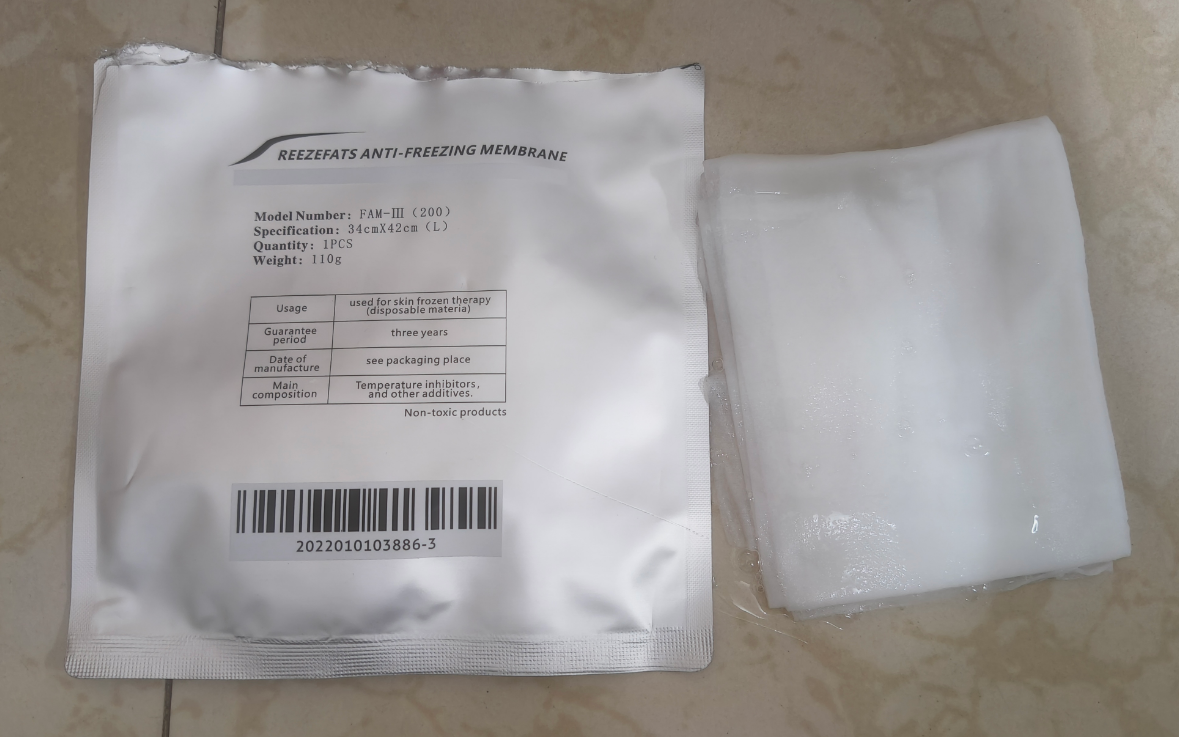
The pad itself is usually a non-woven cotton or cellulose fabric — similar to a thick cosmetic sheet mask. What makes it work isn’t the fabric. It’s what the fabric is soaked in.
A proper medical-grade anti-freeze membrane contains a cryoprotectant gel made from:
Together, these ingredients can lower the freezing point of the skin’s surface fluid to somewhere around -15°C to -25°C — well below the applicator temperature. The skin stays liquid while the fat below crystallizes. That’s the whole mechanism.
Is It Safe? What to Look For
A decent anti-freeze membrane should be:
- Hypoallergenic — the ingredients (glycerin, propylene glycol, PEG) have decades of safety data in topical medical applications. Allergic reactions are extremely rare, but they can happen. If a patient has a known propylene glycol sensitivity, test a small patch first.
- Non-toxic — nothing in a standard membrane is poisonous. The ingredients are the same class of compounds used in IV medications, cosmetics, and food products. They sit on intact skin for 30-60 minutes and get wiped off. Systemic absorption is negligible.
- Medical-grade fabric — the cotton or non-woven carrier should be clean, lint-free, and strong enough not to tear when the vacuum pulls the tissue into the applicator cup. Cheap membranes that disintegrate under suction leave fibers on the patient and can clog the handpiece vacuum port.
- Single-use only — this is not a cost-cutting suggestion. The membrane loses its cryoprotectant concentration during a treatment session as the gel transfers into the skin. A used membrane won’t protect the next area properly. Plus there’s the hygiene issue — reusing a pad that’s been pressed against one patient’s skin for 40 minutes on another patient is asking for trouble.
How to Spot a Bad Membrane
- Too thin — holds less gel, less protection. You want at least 60g of gel per membrane for standard sizes.
- Dry or crusty out of the package — means the seal failed and the gel evaporated. Throw it out.
- No waterproof backing layer — good membranes have a thin waterproof film on the side facing the machine. Without it, the vacuum can suck gel into the handpiece, which gums up the internal cooling channels over time.
- Weird smell — fresh membranes have a very faint, neutral smell. A chemical or sour odor means something’s degraded.
Size Guide — Which Membrane for Which Area
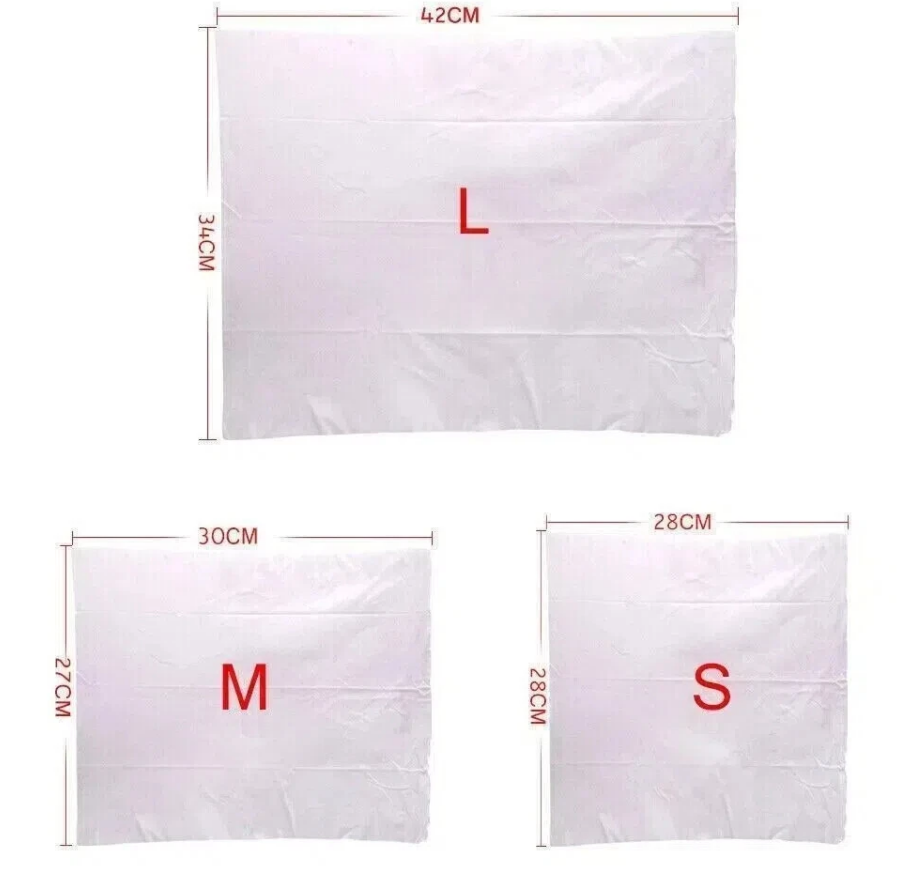
Matching the membrane to the treatment area matters. Too small and the cooling plate edge can contact unprotected skin. Too large and you’re wasting money on extra material that gets folded or trimmed off.
Most clinics stock 2-3 sizes: a small (28×28) for chin and arms, a medium (32×32) for flanks and thighs, and a large (34×42) for abdomen. If you’re only going to keep one size, a 28×28 or 32×32 works for most areas — you can overlap two membranes for large abdomens.
How to Use, Store & Dispose
Application — 30 Seconds
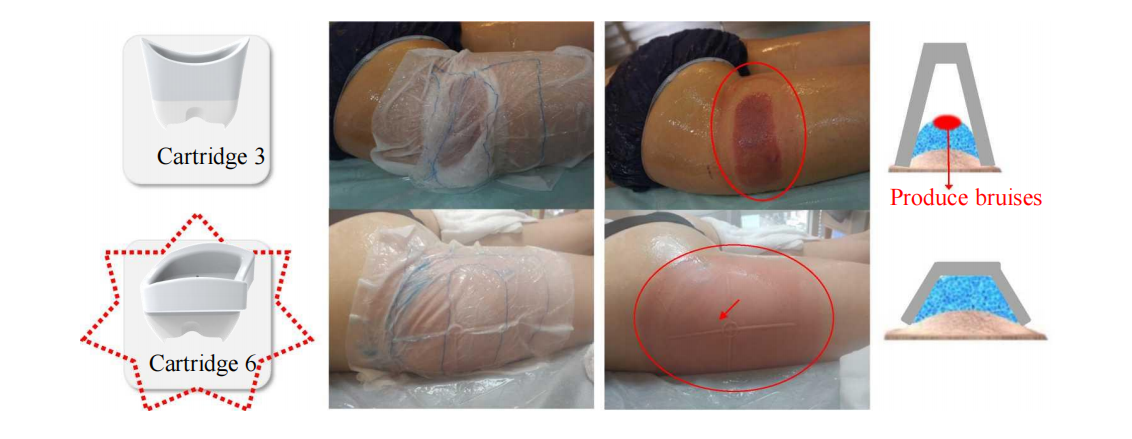
- Clean the treatment area with alcohol or antiseptic. Dry thoroughly — the membrane adheres better to dry skin.
- Remove the membrane from its sealed package. Don’t open it until you’re about to use it — exposure to air starts drying the gel.
- Place it flat on the skin, smooth side down, covering the entire treatment area plus about 2cm margin on all sides. The cooling plate should never contact unprotected skin.
- Position the applicator over the membrane. Turn on the vacuum. The membrane should stay flat and not bunch up.
- After treatment, remove and discard. Wipe any residual gel off the patient’s skin.
Storage
- Keep in original sealed packaging until use. Once exposed to air, the gel starts losing moisture.
- Store at room temperature — 15-25°C. Don’t refrigerate (condensation inside the package) and don’t leave in a hot treatment room (accelerates gel degradation).
- Shelf life is typically 2-3 years from manufacture. Check for a production date on the package. If you can’t find one, ask your supplier.
- Don’t buy in extreme bulk unless you have the volume. A box of 100 membranes sitting on a shelf for 2 years will degrade even sealed. Order roughly 3-6 months’ supply at a time.
Why You Can’t Reuse Them
A used membrane looks fine — no tears, no discoloration. You’ll be tempted to flip it over and use the other side on the next patient. Don’t. Two reasons:
- The cryoprotectant is depleted. After 30-60 minutes of contact with warm skin, most of the glycerin and propylene glycol has migrated from the membrane into the patient’s skin. The pad is mostly just damp fabric at this point. It won’t protect the next area.
- Cross-contamination. The membrane sits against skin that’s been vacuum-pulled into the applicator. Tiny amounts of sweat, skin bacteria, and surface oils end up in the fabric. It’s not sterile after use. Treat it like a used bandage — single use, then trash.
FAQ
Can I use ultrasound gel instead of an anti-freeze membrane?
No. Ultrasound gel is a coupling agent for acoustic energy, not a freeze protectant. It has zero cryoprotectant properties. At -10°C, ultrasound gel freezes solid and the patient gets frostbite. The membrane is not optional — it’s a safety device.
What happens if I use a membrane that’s too small?
If the cooling plate edge extends past the membrane and contacts bare skin, you’ll get a localized frostbite burn — a rectangular red mark matching the plate edge. It’ll heal, but it hurts, it looks bad, and the patient will be unhappy. The membrane needs to extend at least 2cm beyond the cooling plate on every side.
Can I cut a large membrane to fit a small area?
Yes, but cut it before you apply it. Don’t cut it while it’s on the patient. And use clean scissors — you’re basically performing a minor medical procedure. The cut edge doesn’t affect function as long as the membrane still fully covers the treatment area.
Are all anti-freeze membranes the same, or do brands matter?
The ingredients are similar across brands — glycerin, propylene glycol, PEG, water. What differs is the fabric quality, the gel concentration, whether there’s a waterproof backing layer, and the consistency batch to batch. Cheap membranes use thinner fabric with less gel and no waterproof backing. They technically work but give you less margin for error. If you’re a high-volume clinic, buy a sample pack from a few suppliers and test. You’ll notice the difference in how the membrane holds up under vacuum.
How do I know the membrane is still good if the package has been sitting for a while?
Open one and check: it should feel damp but not dripping, cool to the touch, and flexible — like a thick wet wipe. If it’s dry, crusty, stiff, or has brown/yellow discoloration, the package seal failed and the gel has degraded. Don’t use it. If one in a batch is bad, check the rest — seal failures tend to be batch-wide.
Cryolipolysis Anti-Freeze Membranes & Accessories
We supply medical-grade anti-freeze membranes in all standard sizes — 28×28, 32×32, 34×42 cm — plus cryo handpieces, applicator cups, vacuum pumps, and complete fat freezing machines. Ask about membrane sample packs →