IPL, SHR, E-light, OPT — if you have been shopping for a hair removal machine, these four labels are everywhere. Suppliers throw them around like they are interchangeable, but they are not. Each one works differently, excels at different things, and has real trade-offs that affect how your patients feel and how effective the treatments are.
This guide explains what each technology actually does — not the spec-sheet version, but what matters in a treatment room: which one hurts less, which one clears hair faster, and which one you should buy based on the kind of patients you treat.
First: The Four Technologies at a Glance
Pain scores from clinical studies (Karaca et al., Balkan Medical Journal). SHR pain scores from multiple clinic-reported VAS data.
Traditional IPL — The Old Standard
Traditional IPL fires a single high-energy pulse of broad-spectrum light (400–1200nm) into the skin. The melanin in the hair absorbs the light, converts it to heat, and the follicle temperature spikes to 65–72°C — enough to destroy it. This works. It has been working since the 1990s.
What it does well: For fair-skinned patients with dark hair, traditional IPL is effective and well-understood. Every IPL clinic knows how to use it, every supplier sells lamps for it, and the machines are the cheapest on the market. If you treat mostly Fitzpatrick I–III patients with brown-to-black hair, traditional IPL does the job.
Where it falls short: Three things. First, it hurts — patients rate it around 5.7 out of 10 on average, described as a sharp rubber-band snap. Second, it is slow — 0.3 to 1 Hz means you stamp the handpiece, fire, lift, move, stamp, fire, lift. A full leg takes forever. Third, the energy is absorbed by everything dark in the skin — not just the hair. On darker skin types (Fitzpatrick IV+), the melanin in the epidermis competes with the hair melanin for the light, and you get burns or hyperpigmentation.
SHR (Super Hair Removal) — The Pain-Free Evolution
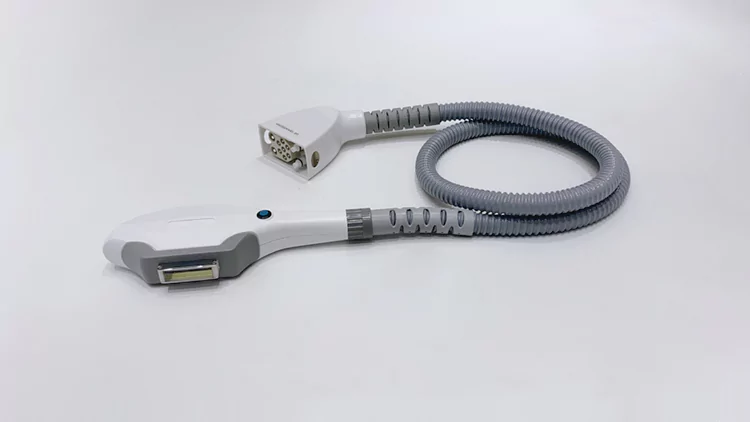
SHR flips the traditional IPL approach on its head. Instead of one big painful pulse that kills the follicle instantly, SHR fires many low-energy pulses rapidly (up to 10 per second) while the handpiece glides continuously over the skin. The follicle heats up gradually to about 45°C — warm enough to disable it, but below the threshold where pain receptors fire and burns happen.
The spectrum is narrower too (650–950nm for hair removal vs. 400–1200nm for traditional IPL), filtering out the harmful UV and deep infrared that traditional IPL blasts into the skin. About 50% of the effect comes through melanin absorption and 50% through heating the stem cells responsible for hair production — which is why SHR works better on fine hair than traditional IPL.
Clinical data: Studies show about 50% hair reduction at 6 weeks and 40% at 6 months after just 3 sessions. Another study on darker skin types (Fitzpatrick IV–V) reported 73% hair reduction on the chin and 52% on the upper lip after 6 sessions. The takeaway: SHR is particularly strong on darker skin where traditional IPL struggles.
What it does well: It is nearly painless — patients describe it as a warm stone massage. Treatment speed is dramatically faster — about 1/8 the time of traditional IPL for large areas because you glide instead of stamping. It is considerably safer on darker skin (Fitzpatrick I–V). And the in-motion technique means you do not get missed spots between stamp placements.
Where it falls short: Same limitation as IPL for hair color — it still needs melanin. Blonde, grey, and white hair will not respond well. And the lower per-pulse energy means you need more total treatment sessions to achieve the same endpoint. Most protocols call for 6–10 SHR sessions vs. 5–8 for traditional IPL. It is more comfortable per session, but it is more sessions.
E-Light (IPL + RF) — The Color-Blind Option
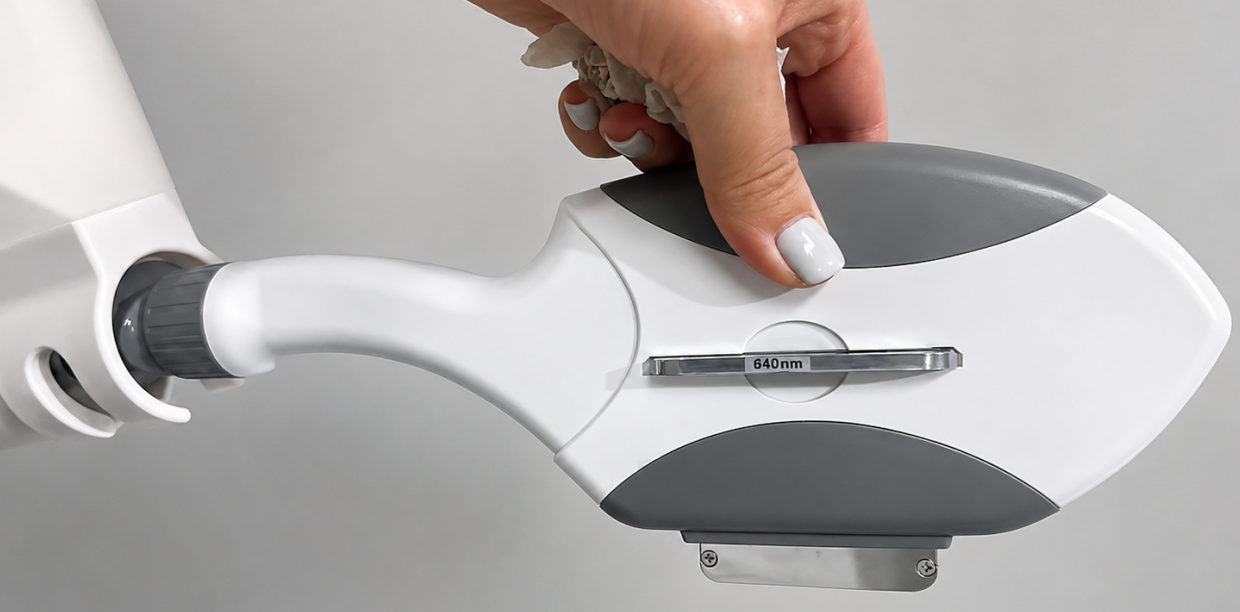
E-Light combines traditional IPL with radio frequency (RF) electrical energy in the same handpiece — a technology called ELOS (Electro-Optical Synergy). The IPL targets melanin like normal. The RF adds deep dermal heating that does not care about color at all. RF energy passes right through the epidermis and heats the dermis and hair follicle directly, regardless of how much or how little melanin is present.
This makes E-Light the only one of these four technologies that can treat blonde, grey, white, and fine vellus hair. Not perfectly — no machine clears peach fuzz the way a diode laser clears dark terminal hair — but significantly better than IPL or SHR alone.
What it does well: Treating hair colors and skin types that IPL/SHR alone cannot handle. The RF component is color-blind — it heats tissue based on electrical impedance, not light absorption. This also makes E-Light the safest option for dark skin, because you can lower the IPL fluence and let the RF do more of the work, reducing the risk of epidermal burns from melanin competition.
Where it falls short: More complex technology means more things that can break. The RF circuit, the IPL lamp, and the cooling system all need to work together. It is also more expensive than a straight IPL or SHR machine. And the treatment mode is stationary (like traditional IPL) — no in-motion gliding, so large areas are slower than SHR.
OPT (Optimal Pulse Technology) — The Refined IPL
OPT is the least revolutionary of the four — it is an improvement on traditional IPL, not a different technology. Think of it as IPL 2.0.
Here is the problem OPT solves: in a traditional IPL pulse, the energy spike is uneven. The first 0.5 milliseconds deliver a sharp jolt of power, then it tapers off. That initial spike is what causes most of the pain and burn risk — it overheats the epidermis before the heat can diffuse to the follicle. OPT breaks each pulse into 7–15 evenly distributed sub-pulses, each one delivering the same controlled amount of energy. The total energy is the same, but it arrives smoothly instead of in a spike.
Result: lower pain, lower burn risk, more consistent heating of the follicle. Pulse width can be fine-tuned from 0.1ms to 9.9ms in 0.1ms steps, giving you much more control over the treatment for different skin types and hair thicknesses.
What it does well: It makes traditional IPL safer and more comfortable without changing the fundamental technology. If you want IPL-style results but your patients complain about pain, OPT is a meaningful upgrade. Most modern machines now use OPT by default — the term “IPL” increasingly means “OPT-based IPL” on current-generation equipment.
Where it falls short: Same melanin-dependence as IPL. Same speed limitation if used in stationary mode (though many OPT machines now support in-motion). And the term “OPT” gets thrown around loosely by manufacturers — just because a machine says OPT does not mean the sub-pulse distribution is actually uniform. Cheap OPT implementations are just marketing.
Which One Should You Buy?
FAQ
Is SHR just a marketing term, or is the technology actually different?
The technology is different. Traditional IPL delivers a few high-energy pulses per second in stamp mode. SHR delivers up to 10 low-energy pulses per second in continuous in-motion mode. The handpiece cooling is also different — SHR handpieces typically have sapphire contact cooling that runs continuously, while traditional IPL often cools between pulses, not during. You can feel the difference immediately. Whether a specific machine labeled “SHR” actually delivers genuine SHR performance is a question of manufacturer quality — but the concept is real.
Can one machine do all four technologies?
Most modern multi-function machines combine two technologies in one console with swappable handpieces. The most common configurations are SHR+SHR (dedicated hair removal + skin rejuvenation handpieces), SHR+E-Light, and E-Light+Nd:YAG. No single handpiece does all four — each technology requires different internal hardware. But one console with two or three handpieces can cover most of the spectrum.
Which technology has the lowest consumable cost?
Traditional IPL and OPT have the lowest consumable costs — xenon lamps run $10-50 and last 100,000–500,000 shots. SHR handpieces use similar lamps but may need more frequent replacement because the higher repetition rate puts more thermal cycles on the lamp. E-Light has the highest consumable cost because you are maintaining both an IPL lamp AND an RF circuit — two things that can fail instead of one.
What about diode laser — should I just skip IPL/SHR/E-Light and go straight to diode?
Diode laser (808nm) is the gold standard for permanent hair reduction — 90-99% follicle clearance, works on darker skin, faster than any IPL-based technology. But diode machines cost 3-5 times more than IPL-based machines, and the handpiece replacement cost is far higher. For clinics starting out or treating a broad patient base, SHR gets you 70-80% of the results at 1/3 the equipment cost. Start with SHR. Upgrade to diode when your volume justifies it.
IPL Lamps, Handpieces & Filter Glass — All Technologies
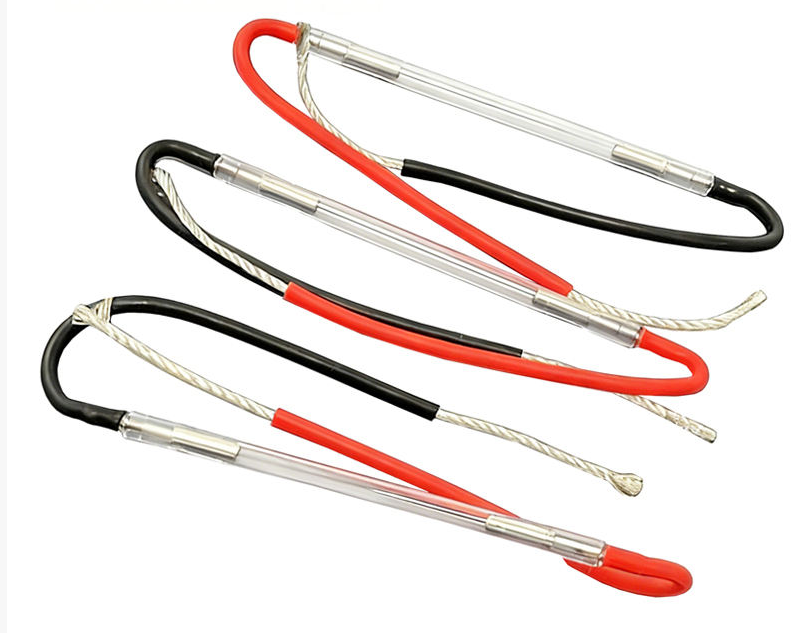
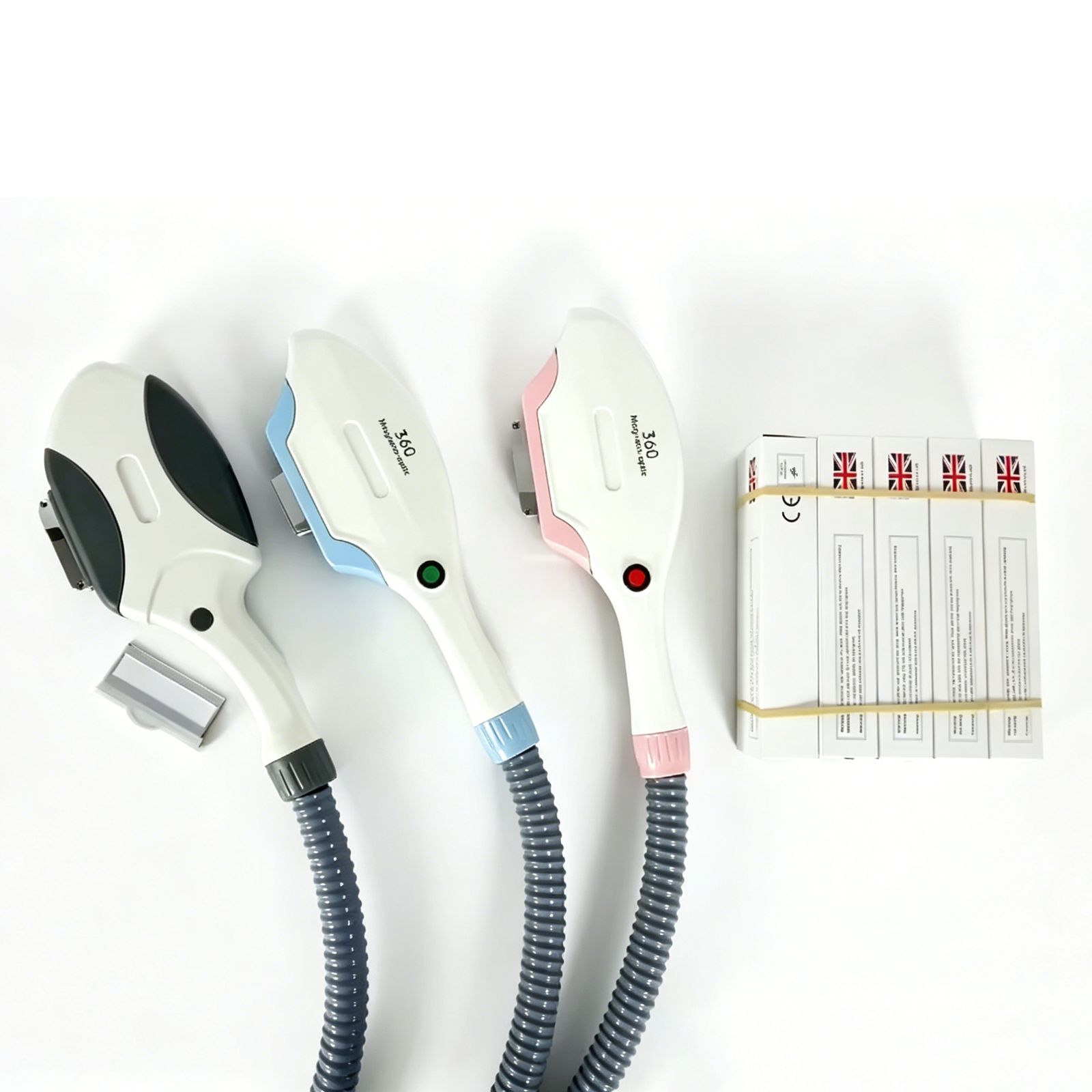
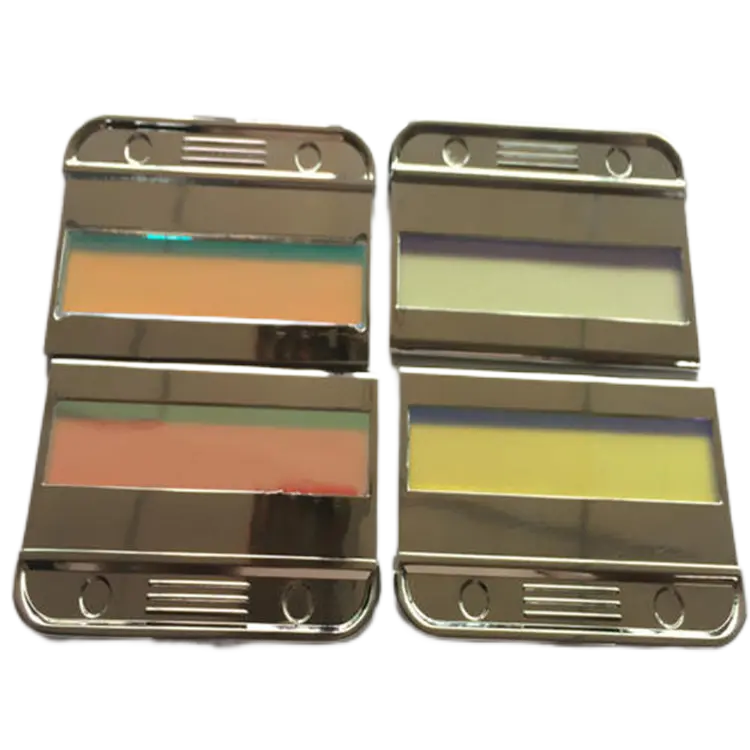
Whether you run traditional IPL, SHR, OPT, or E-Light — we stock the xenon lamps, handpieces, and filter glass you need. Not sure which lamp fits your handpiece? Send us a photo with a ruler →