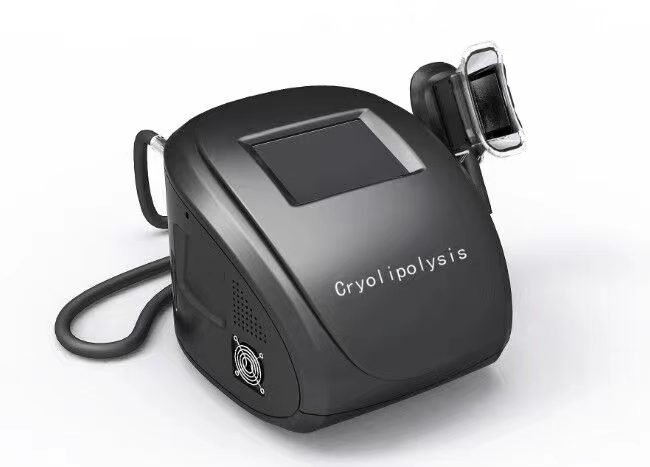
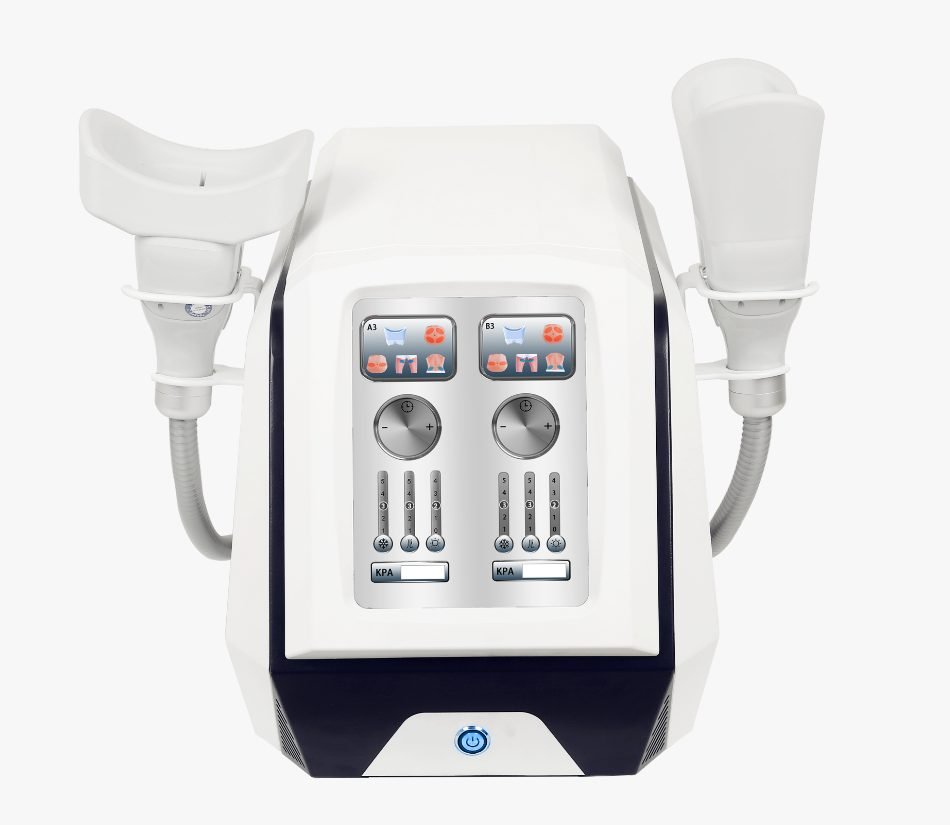
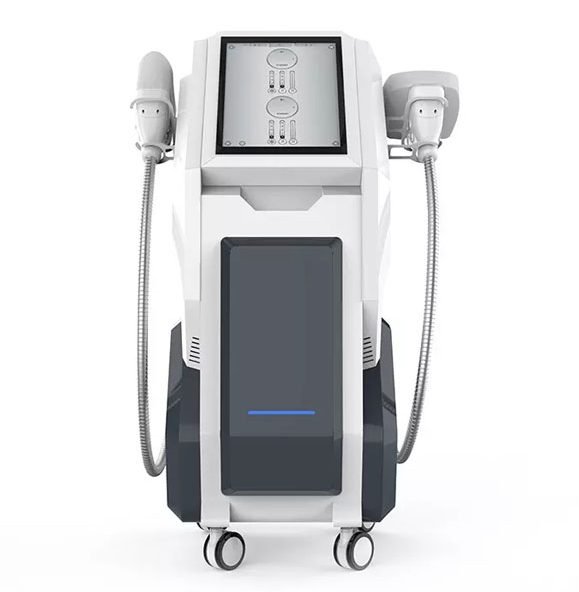
Search “cryolipolysis machine” and you’ll land on two completely different products wearing the same name. There’s the $300 gadget on Amazon that promises to freeze your belly fat while you watch TV. And there’s the $5,000-plus machine a clinic actually treats patients with. Same principle — cold kills fat cells — but the gap between them is bigger than most buyers realize. If you’re adding fat freezing to a clinic, running a mobile service, or even wondering if the home version is a shortcut, here’s the honest breakdown.
These Are Not Two Versions of the Same Thing
A lot of buyers assume a home-use machine is just a smaller, cheaper version of the professional one. It’s not. They’re built for different people, different standards, and different outcomes:
Notice the biggest gap isn’t price — it’s whether the machine can actually reach and hold the temperature that kills fat. Everything else is a consequence of that.
What a Home-Use Machine Actually Does (and Doesn’t)
Cryolipolysis works on one hard physical fact: fat cells start dying — undergoing apoptosis — at around 4°C. Below that, they crystallize and the body clears them out over the following weeks. To hit that number safely on a real body, the cooling plate has to run colder than 4°C (to overcome skin and tissue resistance), and it has to hold that temperature for 30-60 minutes.
A home-use machine rarely does either. The $200 gadget runs on a single small Peltier chip — the same thermoelectric component in a USB drink cooler — and it can’t pull enough heat out of living tissue to reach a therapeutic temperature. What the user feels is “cold,” but it’s more like pressing an ice pack on your skin than a controlled medical freeze. An ice pack feels cold too, and nobody loses belly fat from an ice pack.
This is why the FDA’s position is what it is: the safety and effectiveness of at-home fat-freezing devices has not been established, and cryolipolysis is considered a professional, prescription-use treatment. Not because of lobbying. Because the home devices physically can’t do the thing they advertise.
The Safety Problem Nobody Mentions in the Listing
There’s a nastier side to this than “it doesn’t work.” A device that cools unevenly — or one the user runs longer and longer hoping for a result — can cause real injury:
- Freeze burns and frostbite. Without precise temperature monitoring, the cooling surface can dip below safe levels in spots, or the user leaves it on too long. The result is the same kind of tissue damage as a real freeze burn: blisters, numbness, and in bad cases skin necrosis.
- No medical screening. Cryolipolysis only treats subcutaneous fat — the pinchable layer. It does nothing for visceral fat (the deep fat around organs), and a home user can’t tell the difference. They treat the wrong thing, see no result, and either give up or over-treat and hurt themselves.
- Treating contraindicated areas. Real machines are used by trained operators who know where not to apply cold. A home user with no training can apply it anywhere the marketing photos show — including areas with thin skin or poor circulation where freezing is genuinely dangerous.
What a Real Machine Gets You — Even a Portable One
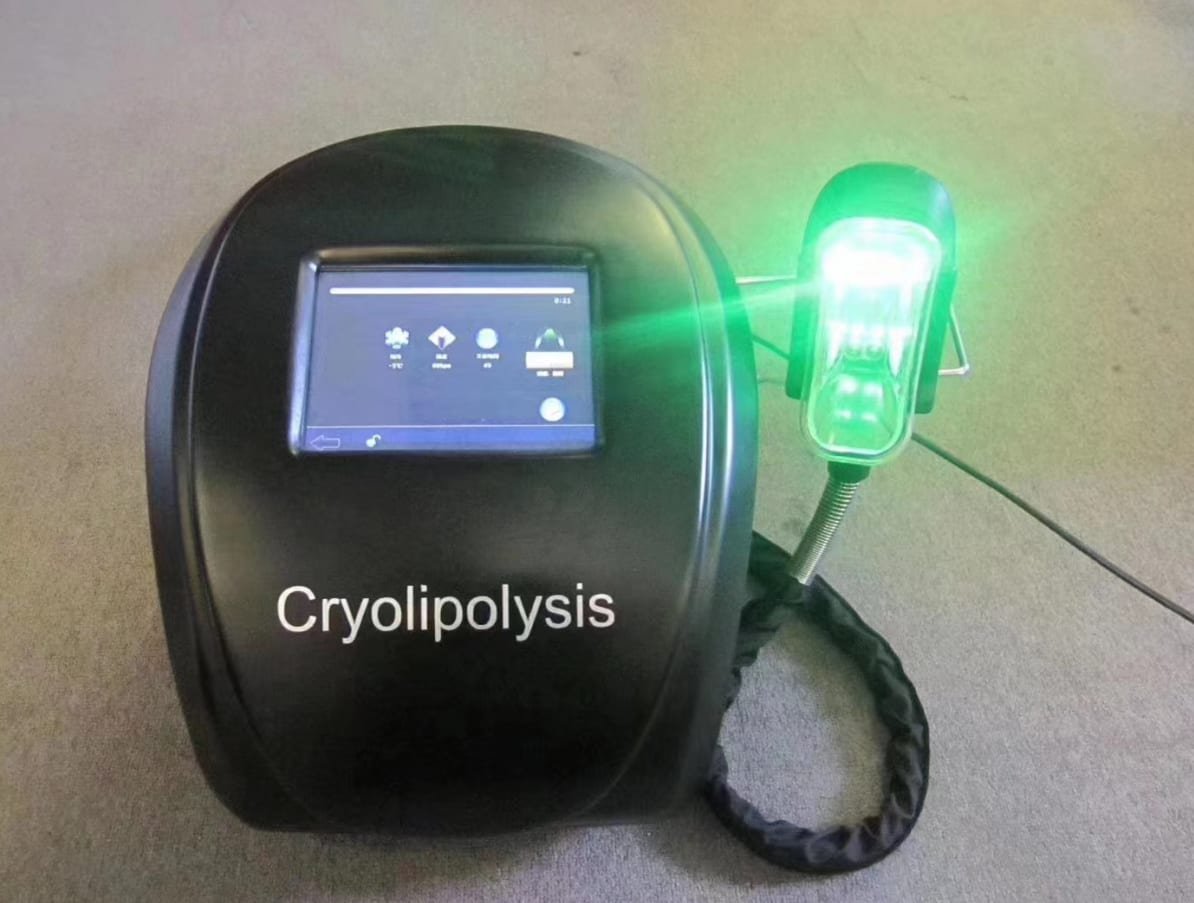
Here’s the part that surprises people: a professional cryolipolysis machine doesn’t have to be a giant floor unit. The same cooling tech now fits in a 12 kg desktop unit that plugs into a standard outlet. This is the category worth paying attention to, because it’s the one that actually delivers results without the full-size price tag.
Take a portable professional unit as the benchmark. A real one gives you:
- -15°C to +5°C with ±1°C accuracy — the full therapeutic range, held stable, not a guess.
- 2-plate cooling + semiconductor TEC — the same dual-panel cooling as a full-size machine.
- 0-80 Kpa vacuum suction — draws the fat fold into the cup so the cold hits only the fat layer, the part home devices skip entirely.
- CE MDR + ISO 13485 certification — the medical-grade paperwork a consumer gadget simply doesn’t have.
The trade-off versus a big machine is honest: a portable unit is single-handle and runs a bit slower (50-60 minutes per area versus 30-40 for a 360° full-size). Results are the same. For a clinic doing 1-4 treatments a day, or a mobile practitioner, that’s usually a very good trade.
When a Portable Professional Makes Sense
The portable professional machine — not the home gadget — is the smart buy in a few specific situations:
- Mobile and home-visit services. At 12 kg, it fits in a carry case, plugs into any wall outlet, and sets up in five minutes. This is the #1 choice for practitioners who bring the treatment to the client.
- A clinic adding cryo to the menu. Lowest upfront cost of the real machines, so it’s the natural first unit before you graduate to a dual-handle or 360° system.
- Limited space. Desktop footprint (36 × 30 × 28 cm) means it doesn’t need a dedicated treatment room.
The Real Cost Math
Here’s the arithmetic people skip. A home-use device costs $300, and the typical buyer uses it weekly for months and sees nothing — because the mechanism isn’t there. That’s $300 spent, plus the cost of the professional treatment they eventually book anyway.
A portable professional machine costs more up front, but it generates money instead of just spending it. At a modest $150-250 per session and 4 sessions per client per area, a single machine pays for itself inside the first 10-15 clients. That’s the difference between a tool that costs you money and one that earns it.
FAQ
Can I use a home-use cryolipolysis machine in my salon?
You can, but you shouldn’t. Clients pay for results, and a device that can’t hold a therapeutic temperature will produce complaints, chargebacks, and damage to your reputation — fast. If you’re charging people, you need a machine that can actually deliver the treatment, which means a professional unit with CE MDR certification.
Is cryolipolysis safe to do at home?
The FDA hasn’t established the safety or effectiveness of at-home fat freezing. The risks — freeze burns, uneven cooling, treating the wrong tissue — are real and well documented. Cryolipolysis is a professional treatment for a reason.
What’s the cheapest real cryolipolysis machine?
A portable professional unit is the entry point. It’s still a proper 2-plate, CE-certified machine — just single-handle and desktop-sized. If the price looks too close to a home gadget, that’s a red flag: a genuine machine that reaches and holds -10°C costs what it costs.
Do I need training to use a professional cryolipolysis machine?
Yes. The machine isn’t the hard part — knowing which areas to treat, how long, and who’s a contraindicated patient is. Reputable suppliers include training videos and a user manual, and most operators get comfortable inside a week. But it’s operator-run equipment, not a plug-and-play home appliance.
Is a portable machine as effective as a full-size one?
For results, yes — it uses the same 2-plate cooling and the same -15°C to +5°C range. The trade-offs are single-handle capacity and slightly longer sessions (50-60 min vs 30-40 for 360°). For 1-4 treatments a day, it’s indistinguishable in outcome.
Portable Cryolipolysis Machines & Fat-Freezing Equipment
We supply CE MDR-certified professional cryolipolysis machines — from a 12 kg portable unit to dual-handle and 360° systems — plus every consumable: anti-freeze membranes, handles, and applicators. Ask for a quote →