Why Your Choice of Treatment Tip Matters More Than You Think
Here’s something most ND YAG operators don’t think about until they’re halfway through a tattoo removal that isn’t going well: the treatment tip isn’t just an accessory. It determines your wavelength, your spot size, and ultimately how deep the laser energy goes.
Pick the wrong tip and you’re either burning the epidermis with no ink fading underneath, or you’re dumping energy so deep the patient feels it for a week with nothing to show for it.
This guide covers the four wavelengths you’ll actually encounter, how to match spot size to what you’re treating, and when to swap out an old tip before it starts costing you results.
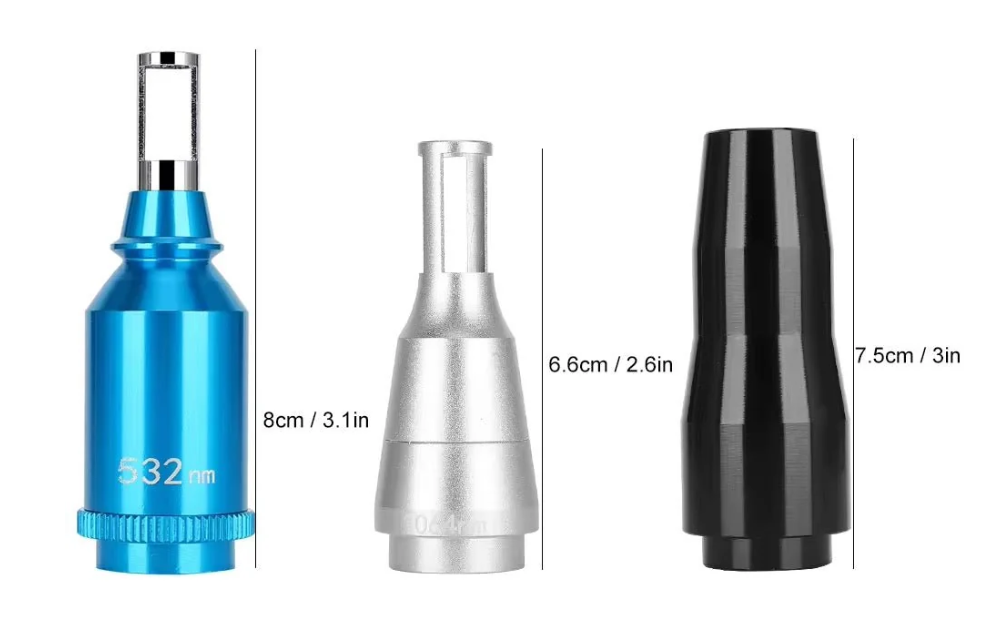
ND YAG Treatment Tip Wavelengths — What Each One Actually Does
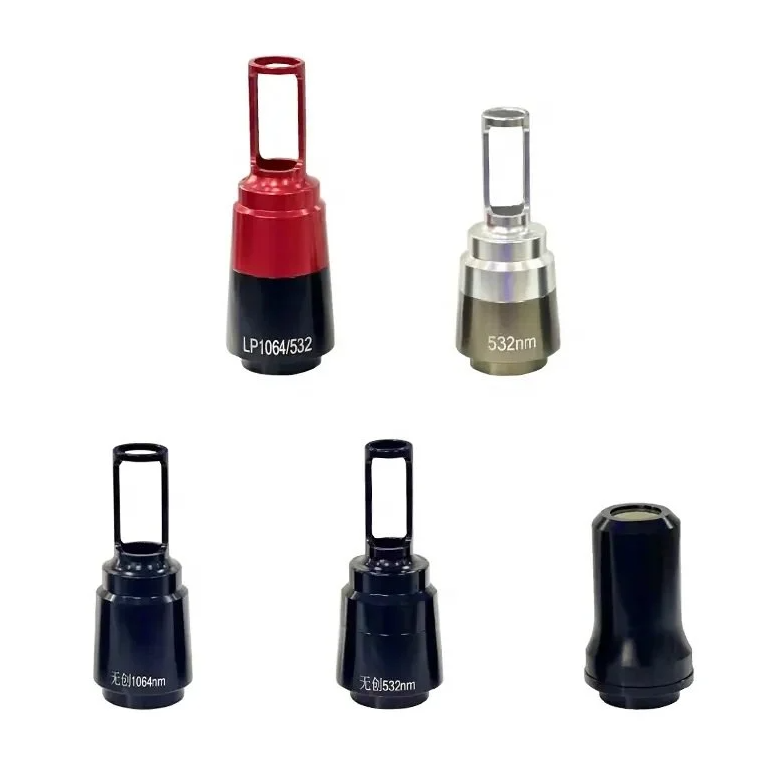
Your handpiece generates 1064 nm at the source. The treatment tip — also called the articulated arm tip or delivery tip — uses a KTP crystal or other optical element to convert that energy to a different wavelength. Each wavelength penetrates differently and targets different chromophores.
Spot Size: The Forgotten Variable That Controls Depth
Most operators think of spot size as “how big the beam is.” That’s half the story. The bigger factor is penetration depth.
Physics works like this: a larger spot scatters less inside tissue. The beam stays tighter and goes deeper. A smaller spot scatters more, dumping most of its energy in the first millimeter or two. So spot size isn’t just about coverage speed — it’s about whether you’re hitting the target at all.
Here’s what this means in practice: you’re treating a black tribal tattoo on a Fitzpatrick IV patient’s back. You want a 6 mm 1064 nm tip. The larger spot pushes energy deep enough to reach the ink without cooking the epidermis. Go too small and you’ll blister the skin before the ink feels anything.
Matching Tip to Treatment: A Quick Reference
For Tattoo Removal
For Pigmentation & Skin Rejuvenation
- Freckles & superficial sun spots: 532 nm, 2–3 mm spot, low fluence (2–3 J/cm²). Endpoint: immediate whitening, then slight erythema.
- Deep pigmentation (melasma, Hori’s nevus): 1064 nm, 6 mm spot, slow passes (10 Hz) until mild erythema. Avoid 532 nm on melasma — the thermal inflammation can trigger rebound hyperpigmentation.
- Carbon peel / Hollywood peel: 1064 nm or 1320 nm, 7–8 mm spot, scan until the carbon is fully ablated (audible snapping sound).
- Skin tightening (Genesis mode): 1064 nm, 8–10 mm spot, 5–7 Hz, keep the epidermis at 40–42°C. Multiple slow passes over the target area.
When to Replace Your ND YAG Treatment Tip
Treatment tips don’t last forever. The KTP crystal degrades with every pulse, and the optical coating wears thin. You won’t get a warning light — you’ll just notice your results getting worse.
Here’s what to watch for:
In a busy clinic doing 5–8 tattoo removals a day, expect to replace treatment tips every 12–18 months. If you’re doing mostly pigmentation work (lower fluence), you might get 2 years. But don’t push it — a degraded tip costs you more in repeat treatments than the replacement cost.
Compatibility: Will That Tip Fit Your Machine?
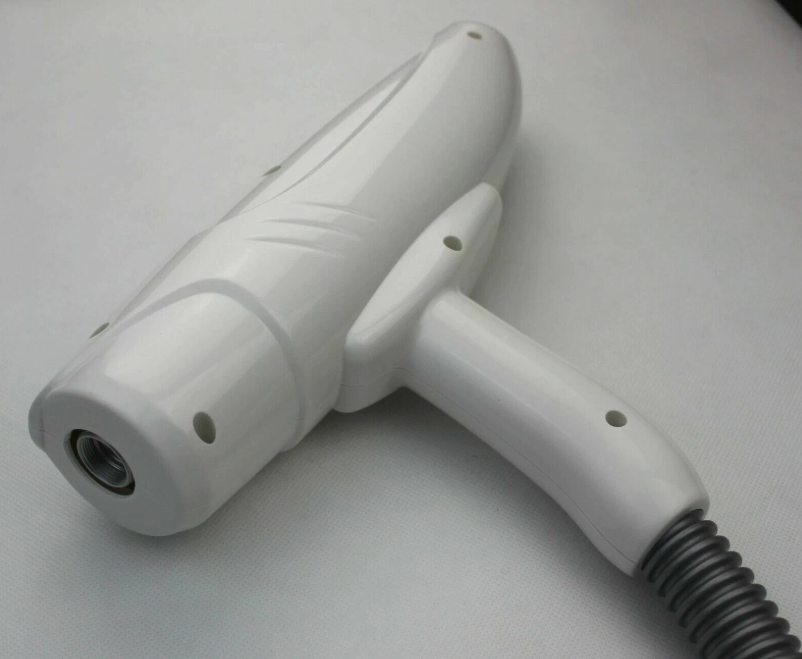
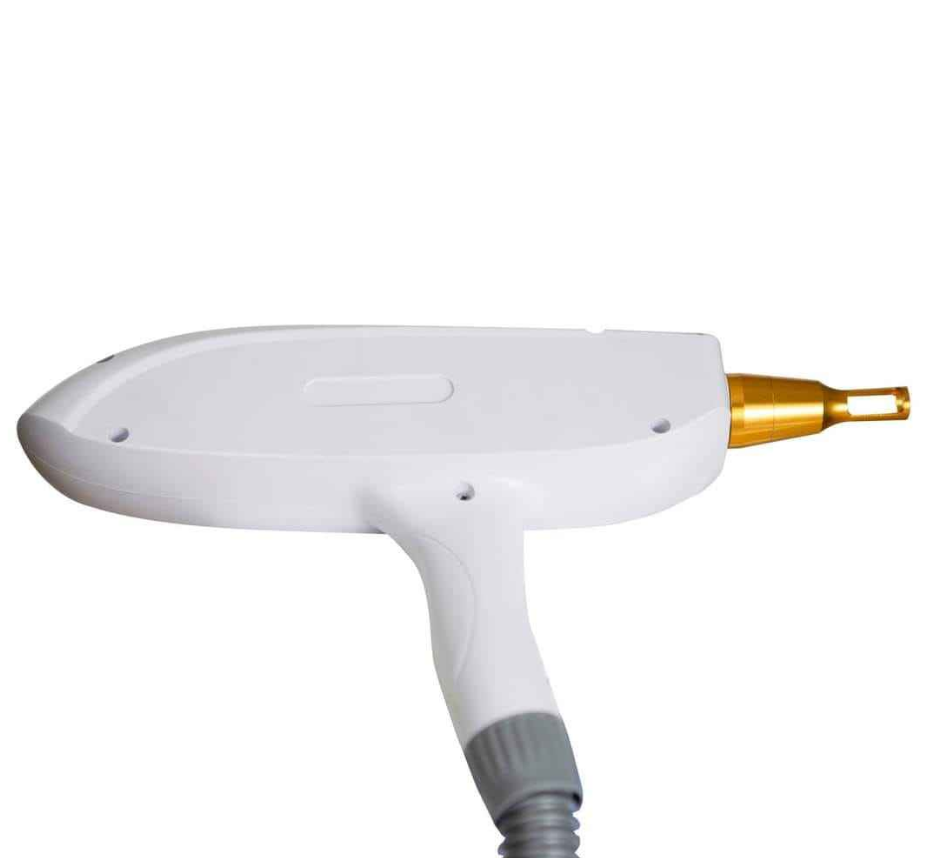
Not all ND YAG treatment tips are interchangeable. The articulated arm connection varies by manufacturer. Chinese Q-switch machines (SPLB, MBT, etc.) generally use a standard bayonet or screw-mount, but American and European brands often use proprietary connectors.
Before ordering a replacement:
- Know your machine model and arm type. If you don’t have the manual, take a photo of the tip connection mechanism.
- Measure the rod diameter. Single-rod vs dual-rod handpieces take different tip mounts.
- Check if your system auto-calibrates. Some machines detect the tip type and adjust energy automatically — others require manual recalibration after swapping.
For the machines we stock at Aesthetic Parts, our tips fit most Chinese Q-switch ND YAG systems. Browse our ND YAG machine hub to see which models we support.
Product Recommendations
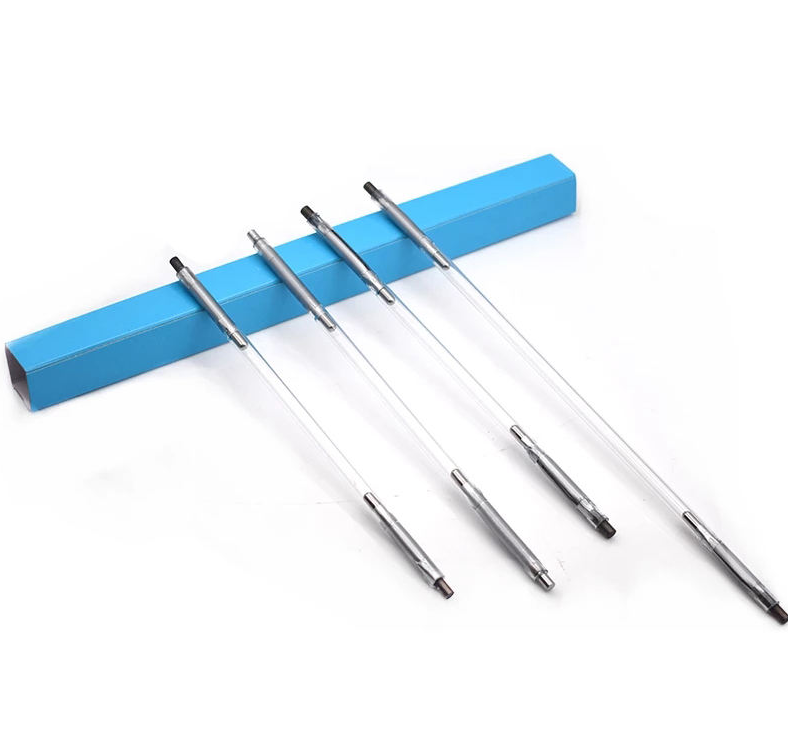
Have a specific machine model and not sure which tip fits? Send us a photo of your current tip and machine — we’ll match it within 24 hours.